We’re all crazy now

PRO-logue. It’s telling that an identical German study to PRO-HEART was shutdown early. Comments by psychiatrist Andreas Ströhle and Nina Rieckmann from their Institute of Public Health : “Dr Angermann and colleagues reported that escitalopram did not reduce all-cause death or hospitalization… It is not clear why the authors expected that it would, as it does not reduce mild to moderate levels of depression… Rather, it adds to the mounting evidence that questions the risk-benefit ratio of prescribing antidepressants to patients with less than severe depression.”

Once upon a time, psychs drew a distinction between depression originating from within (endogenous) or that which arose due to circumstances (reactive). The former was treated by meds, but the market for anti-depressants has grown as the two-type concept has fallen out of favour. Pills manipulating neurotransmitter levels are a simple solution with scrip from your GP, one that doesn’t require psych expertise. The American Psychiatric Association aren’t blameless, since the criteria for mental illnesses is loosened with every release of the DSM. That manual has also expanded in order to inform practitioners of the complexity of the complex. But they have lost control in this non-infectious pandemic. Prof Peter Gotzsche is fanatical in advocating that prescriptions of such meds be reduced 50-fold, but for a less emotive perspective I suggest you follow psychiatrist Professor David Healy, or read his ‘Pharmageddon’.

Followon book to 'Deadly Medicines and Organised Crime'

Followon book to ‘Deadly Medicines and Organised Crime’

Earlier posts have complained at the fabricated conclusion that chronic pain is  manifestation of a mental illness. It was a researcher’s invented report that then conveniently led into a publicly funded trial for anti-depressants in osteoarthritis. It’s to the Royal Aust & NZ College of Psychiatry’s credit that their submission  against Medicine Aust code-of-misconduct application to regulatory authority ACCC was the only one to address perversion of research by industry. If they’re to be believed, academics are corrupted. And if Gotzsche is right, you can’t trust Patient Organisations for … “having done absolutely nothing to stop the blatant abuse of patients in industry-sponsored trials“, citing Dr Ben Goldacre’s book ‘Bad Pharma’ of 2012. It’s worse than that, as you’ll find out.

Heart Foundation Vic CEO Jennifer Johns has earlier come in for ridicule over statins, echoing her disgraced NSW President’s associations with the refined sugar industry. An Austin hospital cardiologist, in 2010 she funded her colleague David Hare and Baker IDI’s Prof Krum to trial  Lexapro as treatment for the depression that their heart failure patients are presumed to suffer, PRO-HEART. Also in this year the manufacturer’s promotion of such off-label usage cost them $USD313m in fines, with civil actions continuing. Such as 03-10395-NMG for wrongful dismissal of sales rep and whistleblower Chris Gobble, who complained to supervisors of “illegal kickbacks (i.e. paying doctors for no other reason than to induce them to prescribe Celexa and Lexapro)”. The marketing budget disclosed in the Confidential plan provided to the US Senate was $35m on speakers fees, and $36m on lunches. In one year. In one country.

The drug is also associated with hyponatremia, ie it worsens heart failure risk. None of the team answered this concern, but they were defended by the Heart Foundation’s Deidre Cope: “In regard to its Research Program, the Heart Foundation follows the NHMRC guidelines around disclosure of interest. The research funded by the Heart Foundation undergoes a rigorous peer review process involving assessment by independent, external reviewers. All funding decisions are scrutinised by an external committee to ensure that all aspects of the peer review process are consistent, transparent and ethical.” Affirming that they’re just as utterly corrupt as the NHMRC, as evidenced by Cicuttini and Wluka’s impunity.

The other half of the $820,000 raised by door-knockers and tin-shakers that PRO-HEART is costing was from Beyond Blue. No responses to approaches were provided at all. It’s too early to allege misconduct – the trial is running three years behind schedule, and a staffer thought late 2017 would see a report released. But it already stinks like something’s died. [Sep 2017 update: 2018 perhaps? BB CEO Georgie Harman states that she’s happy with the study progress – seven years after the first patient was enrolled in the 6month study]

There’s often a trite closing disclaimer in articles that if you suffer from depression, there’s phone support available at these numbers…… who’ll suggest medical advice. I’m more of the opinion that you think carefully, so have linked further material on happiness or absence thereof at http://themindfulgap.com.au/2016/02/05/the-blue-bird-and-the-black-dog/
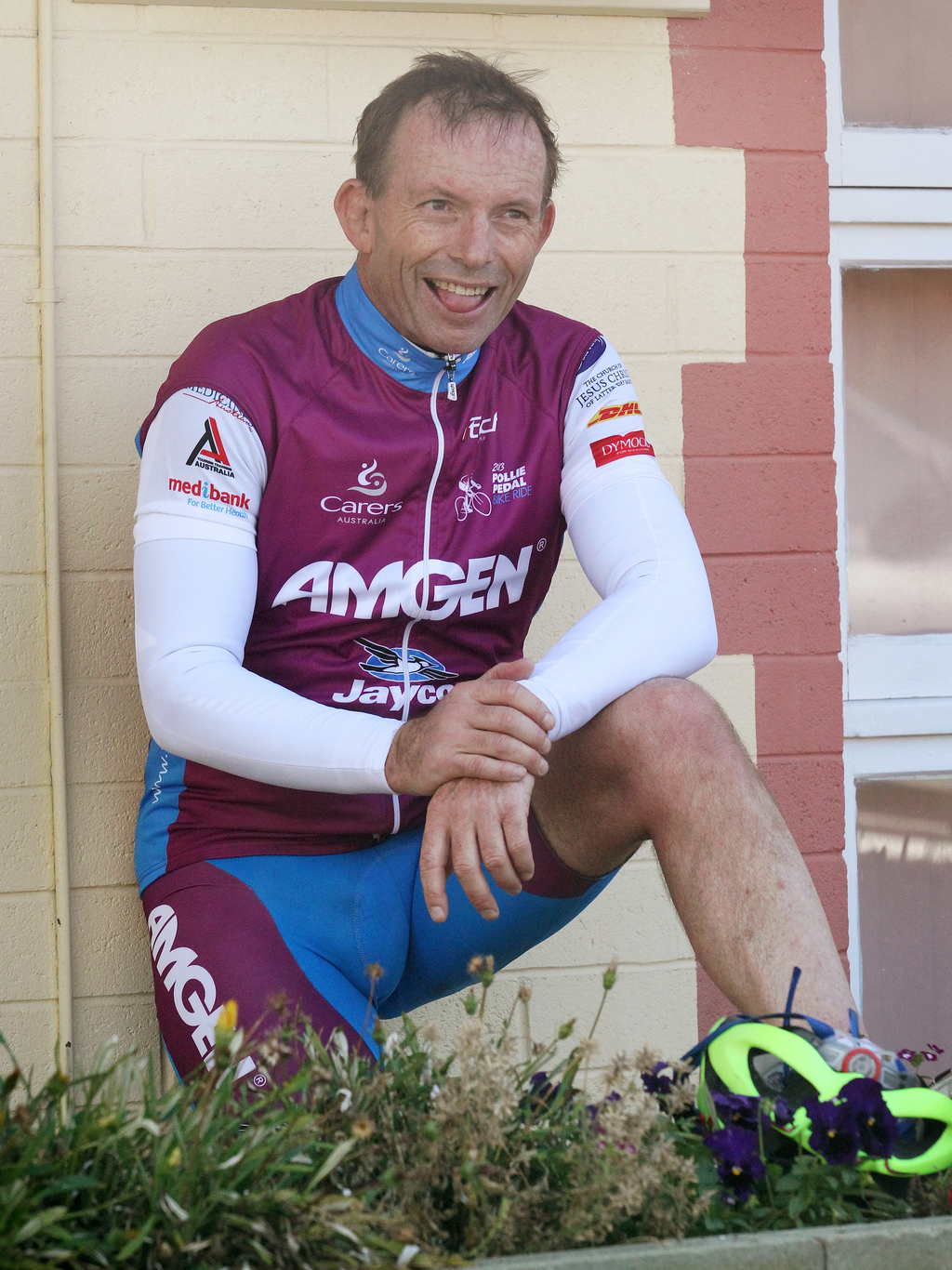



‘The Strange Case of Dr Jekyll and Mr Hyde’ was an 1886 novel written to contrast public and private lives of a reputable gentleman. Duplicity is a constant failing, but often what’s revealed is just an iceberg’s tip above massive issues. Thanks to the only mandatory Pfarma reporting in Oz, Medicine Australia’s Education Events, we know that Pfizer spent an average of $12k on each of the 23 rheumatologists they recently sent to European and American conferences EULAR and ACR. The full reports give an insight into specialist’s lives outside the surgery, as $43.3m was spent on them in the 6 months to Sept 2015. Worse still in 2010 pharmaceutical companies reported $637m expenditure on research, but nobody knows who received the money *. There is monumental potential for conflict-of-interest as the scope of new-gen bio-agents increases (monoclonal antibody drugs, hereafter referred to as the  _mab drugs).

Tony Abbott recovers after finishing Pfarma-sponsored 'Pollie Pedal' in 2013

Tony Abbott recovers after finishing Pfarma-sponsored ‘Pollie Pedal’ in 2013

Amgen sponsored 799 events in the last 6 months. Focusing in more closely, we really can’t be sure just how safe is their anti-inflammatory _mab for arthritis, Enbrel. Regulatory authority TGA advises physicians under Adverse Effects: “In placebo-controlled trials, no increase in the incidence of serious infections (fatal, life-threatening, or requiring hospitalisation or intravenous antibiotics) was observed“. Uhuhh.

Allegations it caused Eagles frontman Glenn Frey’s death due to pneumonia can’t be verified. In the latest EULAR journal ‘Annals of Rheumatic Diseases’ Winthrop & Smolen et al suggest it’s a good idea to track outcomes of _mabs. ‘Opportunistic infections and biologic therapies in immune-mediated inflammatory diseases’ reveals the shortcoming that “no consistent OI [Opportunistic Infection] definition was identified across [368] studies“. Hence a list of OIs was drawn up, topped by the pathogen responsible for pneumonia. The best evidence for their recommendations was the publicly accessible meta-analysis by Kourbeti, Ziakas, & Mylonakis which put the odds of infections 1.8 times higher for _mab recipients than controls (usually patients on frontline med, methotrexate)  in Rheumatoid Arthritis (RA) trials – a small but significant risk. But note that RA doubles that risk over healthy comparators already.

That’s short term though, a trial median of around 6 months for the drug to prove its worth. Aust Rheumatology Association’s Rachelle Buchbinder established the ARAD tracking database a decade ago to determine _mab safety. It’s paid for by Pfizer, BMS and AbbVie. The few reports published in journals thus far inform us of customer satisfaction such as subjective Quality of Life surveys, and that no increased risk of cancer occurs, and that herpes/shingles virus infection rates are 1.7 times higher. Specifically for Enbrel, this result came after a median of 3 years followup. So the longterm prognosis is much like the brief studies would indicate. A worsening, but hardly deadly. Glenn’s manager wisely declares he has taken legal advice to limit his accusation.

This drug inhibits TNF, a cytokine messenger that augments our innate immunity system. As understanding of the molecular basis of many diseases improves, an inflammatory aspect is a recurring theme. The prospects for treatment with anti-TNF therapy look promising, but for the fact that the body needs to be regulated by internal controls. And not shareholders, salesfolk, or Jekyll. Interestingly, a trial for Enbrel in Alzheimers found that TNF levels rose. Feedback systems are adaptive.

Future studies could well heed the EULAR belief that their “… list of infections should be considered potential indicators of alterations in host immunity, and that this list and the associated case definitions should be used to standardise reporting of OIs in future biologic and other disease modifying antirheumatic drug clinical trials“. It’d also be helpful if an outcome tracking registry reported on all OIs, instead of the trickle of data from ARAD. But unease over industry manipulation of research is fuelled by the doctors themselves. When a weakened version of the US Sunshine Act for disclosing contents of the unmarked envelope was being considered by the Aust Competition and Consumer Commission, the AMA submission sought a deferral: “A twelve month delay in implementing the ACCC’s condition would allow health practitioners to think about and plan for their ongoing relationships with pharmaceutical companies.”

Gap payments cover the weekender, the kid's schooling ....

Gap payments

EULAR 2016 is in London. The UK has an Office of Research Integrity, let’s hope some fresher ideas than creative accounting are brought home.

* Source: College of Psychiatry submission to the ACCC. They’re concerned: “Clinical research should be included in the transparency model. All payments above the threshold that are made to individual researchers, or research institutions, including hospitals, should be publicly reported. This would better enable doctors and other health professionals to interpret the research outcomes while taking into account their funding sources.”

Rage, rage against the dying of the light

… from ‘Do not go gentle into that good night’, Dylan Thomas

pfizer

staree


Before delving into the massive NHMRC research investment of public money  ($5.1m upfront) into Pfizer’s Lipitor that is STAREE, some preliminaries:

Few Australians would be unaware of the furore raised by Catalyst (The Heart of the Matter), and subsequent retraction by ABC management of the program. A couple of opinions on Dr Demasi’s journalism by Drs Briffa and Coleman, and their arguing in blog comments shows that even those in general agreement were discordant. Instead of ‘playing the ball’ and take on the well-orchestrated industry, I’ll ‘play the man’ and focus upon individual proponents of statin therapy. And their complicity. It’s a softer target due to a weakness in humanity – insatiable need for funding.
Heart Foundation CEO Jen Johns immediately warned that sales of statins would be harmed, and a month later they published a poll by their Rob Grenfell showing 10% had stopped the therapy. Their corruption is further detailed at this update, and is unsurprising given that the decade-long president is father of Pfizer’s lobbyist Andy Thirlwell. Even before the exposé aired, Prof Emily Banks had pointed the bone * thus: “It’s likely that if this program goes ahead, and it does the unwarranted undermining of statins, that there will be people who didn’t have to have a heart attack and didn’t have to die from a heart attack, who will die through reducing use of statins“. An expert in this field, having authored ‘Erectile Dysfunction Severity as a Risk Marker for Cardiovascular Disease Hospitalisation and All-Cause Mortality’, she’d be appreciative of Pfizer’s infamous blue pills for ED. Dr Grenfell concurs with a warning, “These results tell us that every man who is suffering from any degree of erectile dysfunction should be seeking medical assistance as early as possible“.

Grenfell and Tonkin et al wrote of the confusion in lipid management in May 2015 ‘Clinical Guidelines on Hyperlipidaemia: Recent Developments, Future Challenges and the Need for an Australian Review’ – considering the perspective of the American Heart Association “… the maximum tolerated dose of a statin be generally employed”, but their own concern is absence of an optimal target level: “Whilst the cost-benefit analysis of statin therapy is generally favourable, it is very sensitive to the absolute risk level of the patients selected for therapy”. Andrew Tonkin had already made his mind up in 2005 though, as chair of the Heart Foundation’s consensus Position Statement on Lipid Management a number of guidelines and criteria are given to prescribers. Along with a conflict-of-interest declaration. The same “provision of consulting services to Pfizer” should also have been disclosed in a JAMA report ‘Association of LDL Cholesterol…with Risk of Cardiovascular Events Among Patients Treated With Statins’, that was subsequently amended due to medico complaints to the journal.

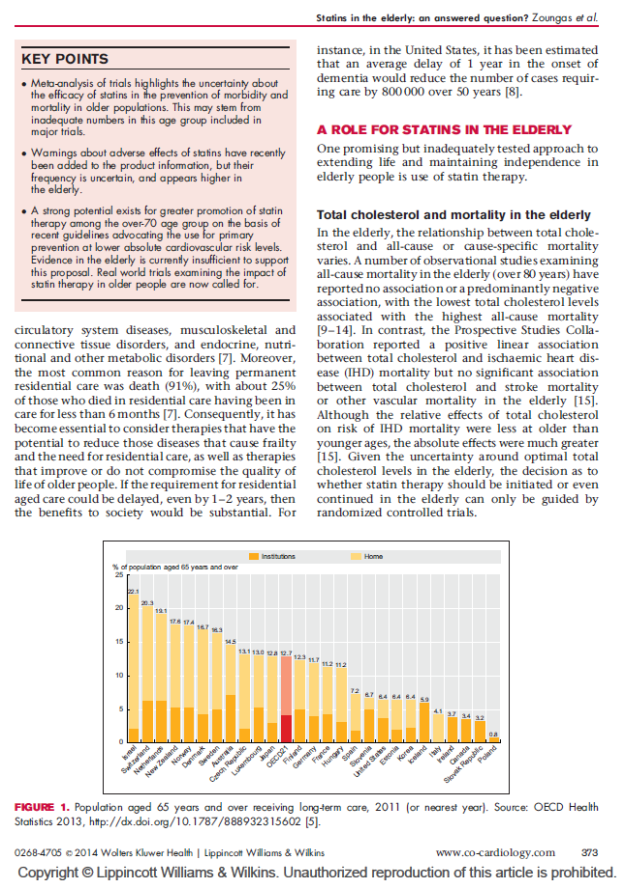
Bias is a relevant fact in STAREE (STAtins for Reducing Events in the Elderly), but frequently missing. Monash colleague Sophia Zoungas should also have declared a 2007 Pfizer personal grant of $55k in articles such as ‘Treatment of Dyslipidemia and Cardiovascular Outcomes: The Journey So Far—Is This the End for Statins(?)’ advocating “the first [Randomised Controlled Trial] to determine the effects of statin therapy vs. placebo in an apparently healthy elderly cohort living independently” ie preventative Lipitor for the over 70s. This is not however, a trial designed to test a hypothesis. It’s an experiment on the elderly to see what happens. Lipitor is the hammer, let’s see if it nails aging! Extending of life is the outcome being investigated – meaning that if they’re wrong, then shortening of life may become apparent.  A successful trial is assured, since my previous example from this department shows an outcome can be invented with impunity. And worsened death rates ‘adjusted for’.

One example of deception is apparent already. In July ’14 Current Opinion in Cardiology neither professor mentions Pfizer’s backing, but offer panacea in claiming: “In a meta-analysis of observational studies, statin therapy was associated with reduction in risk of dementia, Alzheimer’s disease and mild cognitive impairment“. The cited references of Richardson et al (in response to the Lipitor label warning of additional risks, imposed by the FDA in 2012): “Published data do not suggest an adverse effect of statins on cognition.  The strength of available evidence is limited…” and a Cochrane review by McGuinness et al : “Demonstrated lack of benefit of statins compared with placebo on cognitive measures” actually contradict this claim! These issues were raised with Monash Chancellor Finkel, but the reply from his Director, Tony Calder abdicates responsibility: “The matters you allude to in your email are matters that are dealt with by University management therefore the Chancellor, as head of Council, will not be providing a response to your email.

Solving the problem of an aging population?

Solving the problem of an aging population?

Two years after Catalyst aired, a Med Jnl of Aust article advises that over the first eight months 61,000 have made up their own, negative opinion of the meds: “…changes in statin use occurred despite warnings in the Catalyst program that its content should not be taken as medical advice”. Co-author Sallie-Anne Pearson is noncommittal on consequence, having just published a study that concludes: “Deprescribing of statins may be indicated for some older people, because the evidence for benefit in primary prevention of cardiovascular disease is limited and there is an increased risk of side effects in old age.” Other, collaborative colleagues are more determined to restore Lipitor to its heyday position of the highest grossing drug. That popularity arose due to trial results on a surrogate outcome of LDL (Low Density Lipid) levels, without epidemiology data as to whether the drug improves survival rates in the community. We’re a trusting lot.

On the other hand the Brits stay true to form, by constant whinging about risks: http://www.ncbi.nlm.nih.gov/pmc/articles/PMC4714436/ 😉

* Indigenous Australian’s forewarning of death as punishment

Manipulating the market.

Once upon a time, doctors were hanged for unethical human experimentation. Of 16 found guilty of war crimes, 7 were executed by hanging. Nuremberg, then Helsinki, countless other, and most recently the 2010 Singapore Statement on research ethics have convinced us that society has matured. But humanity hasn’t evolved, and the same Hippocratic oath persists.hangedDr

The forthcoming ‘Handbook of Academic Integrity’ has a chapter by Prof Vaux, whose accusation of misconduct against Uni of NSW researcher Levon Khachigian led to his standdown in 2013. That team had received $8.3m in a 2014 cardiovascular grant from NHMRC. The UNSW has just last month cleared Prof Khachigian of all charges, since: ….” breaches were the result of Professor Khachigian’s genuine error or honest oversight, not deliberate or intentional conduct.” The sacked whistleblower who brought the scandal to public attention, Dr Ying Morgan, wasn’t interviewed or requested to make a submission to the confidential inquiry. This was a case of fabricated data, whilst my previous post blogged how un-tampered data can be described howsoever as the study author chooses in order to suit their intent. Then there’s statistical adjustments.

David Vaux quotes Stanford biostatistician Prof Ioannidis, who finds procedural errors interpreting data in the majority of trial reports i.e. most studies are falsely presented. The figure given is 90%, which would mean that only 1 in 10 regulatory approved meds are truly beneficial. Deliberate obfuscation of harm also occurs, and Peter Gotzsche or David Healy are worth reading. The tutorial given at Monash in the Advanced Statistical Methods for Clinical Research subject MPH5270, on how to coverup dozens of deaths in a trial gone awry has already been discussed here . This post moves on from the blatant misconduct, to the insidious – market analysts determining what treatment you can receive.

Naltrexone blocks opioid receptors, and is approved to treat substance abuse. In 1985 Dr Bihari found that a one-tenth strength dose improved survival in HIV and postulated that the body’s endorphins were being boosted. Prof Mark Hutchinson and a team determined in 2009 that a similar molecule, naloxone alleviated chronic neuropathic pain by suppressing neural immune response to a perceived allergen attack, which has relevance in MS, fibromyalgia, Traumatic Brain Injury, and other inflammatory cytokine conditions. This led to Prof Jarred Younger of Stanford Uni trialing Lowdose Naltrexone (LdN) successfully in fibro, using a gold-standard randomised crossover protocol. The FDA didn’t accept the evidence as warranting their approval, and independent researcher budgets were never going to be able to satisfy their demands. A state of play report is available from this open-access rheumatology journal, and rheumatologist Emma Guymer visited their lab. But then reportedly told an LdN advocate that she couldn’t prescribe “for contractual reasons”. Buyers clubs solve this roadblock. There is a growing, loyal online community procuring LdN by either doctors scrip and a compounding pharmacy, or import from Canadian or Israeli sources. This established market seemingly deserves support by US insurance company rebate or else Australian PBS subsidy, so pfarma was approached to start the approval process.
Bristol Myers Squibb held the original patent for Revia/naltrexone, and after deliberating on the request for five months their Medical Director Marian Gandy determined there to be no opportunity: “I have explored the options with our global teams who determine the development programs for our products and regret to inform you that there are no plans to seek any further indications for ReVia“.

Bad drugs are pushed, good drugs are withheld. The system is so broken that suggested reforms, such as voluntary conflict-of-interest declarations, can only ever be window-dressing. That’s right – disclosing commercial allegiance is opt-in, since Australia has no equivalent to the US Sunshine Act. Nor an Office of Research Integrity where Dr Morgan could present her allegations. Because as PM Abbott said, “We’re open for business”.

Your life in their hands

An expression often applied to surgery, but physicians playing God is equally relevant to manipulation by mental health practitioners. Except that it’s Quality of Life that’s at stake. Institutions once committed difficult persons, but today medicating provides that confinement. Mostly beneficial in mental illness, mostly harmful otherwise.

So drawing the line for treatment carries grave responsibility. Complaints of this example of insitutional malpractice I detail here have however, been dismissed by  all governance authorities. In concluding that “Mental health is associated with changes in foot pain. Clinicians dealing with this population should consider the contribution of mental health in their management and treatment of foot pain” the connection is made – unless pain improves, it’s psych. The final page emphasizes the viewpoint, “the results from this current study suggest that foot pain could be related to mental health in the same manner as other chronic musculoskeletal conditions“. *
Except that the author’s data shows no significant association.
Leunig-chemical-imbalance
The report linked contains an untruth. Table 1 shows that mental health isn’t the factor – but rather it’s Vitality , or energy, which is determinant of recovery. The difference of 12 points equates to an increased likelihood of inability to work due to fatigue of over 60%, according to one validation of the SF-36 (Quality of Life) Vitality scale. Limitations of a self-report survey in judging someone to be suffering mental illness aside, this is a fabricated conclusion. And one which suits the purposes of the Professors in their subsequent trial of an anti-depressant in treating arthritis. This is no maverick opinion – Anita Wluka is musculoskeletal editor for BioMedCentral, and her department hosts the musculoskeletal group for the Cochrane Collaboration. It’s not a typo, else the ‘corresponding’ author would acknowledge the error. Nor did the editor of Arthritis Care & Research care to reply, indeed there appears to be no integrity underpinning the evidence base used by every doctor. The university ethics committee overseeing the study answered my challenge but only after four months had lapsed and I’d been suspended by the Dean, for causing distress to these academics by my complaints. Designated integrity advisor Prof Stephen Holdsworth hasn’t responded.

The misconduct isn’t confined to Monash either, Melbourne University obesity expert Joey ‘Mr Big’ Proietto contributed to the study, so their ethics committee was questioned. The only response was: “Due to the [Business Improvement Program] restructure which resulted in this office losing staff we are unable to reply to your request immediately. We will endeavour to respond as soon as possible. Thank you for your understanding“.

 The study was jointly funded by National Health and Medical Research Council and the Royal Aust College of Physicians. NHMRC Director of Grants Saraid Billiards isn’t fussed by misconduct within her alma mater: “we would anticipate that the institution would manage the allegation of research misconduct in accordance with Part B of the Code “. Rheumatology Assigner Academy and coincidentally co-author Prof Flavia Cicuttini could have taken this handpass, but perhaps too busy allocating funds and simultaneously consuming same? RACP “… has rigorous application, review and reporting procedures to ensure a fair and equitable process. …. but the College does not enter into correspondence regarding its decisions.”, according to research manager Laina De Winne. Spokesperson for federal Treasurer Hockey is concerned at budgetary drain, but “As this matter falls directly into the portfolio responsibilities of the Minister for Health the Hon Sussan Ley, Mr Hockey has asked me to refer this matter through to the Minister for her attention.” Joe’s been sent offshore, as our Govt does with many other children of refugees. Office of shadow Health Minister Cath King informs me that the complaint system is working: “Should you wish to pursue your concerns relating to potential conflicts of interest in the grants application process for NHMRC funding, I would encourage you to raise them with NHMRC directly .”

Evidence-based medicine Prof Paul Glasziou is overwhelmed by the extent of fraud: “Good luck with pursuing this. As I now focus on NON-drug interventions and the overall waste in research processes, I no longer get involved in individual problems in drugs research (as that would consume 10,000% of my time!)“. Adjunct Prof Ken Harvey of Medreach agrees, “As Paul Glasziou noted, it is difficult for those of us concerned about such matters to take up every case. The same, regrettably, applies to NH&MRC and University research and governance bodies although you certainly deserve a reply.” He suggested writing to the publishing journal editor, something attempted thrice without response. “Oh dear“, said Ken.

Members of the team are now collaborating with Mandana Nikpour and Andrew Tonkin on a trial of atorvastatin for arthritis, OAKS. Lipitor remains the world’s highest grossing drug on record, and Pfizer quite generous in granting early career kickstarts of $50-55,000. Mandy’s shy regarding her CardioVascularLipids grant, since it’s not declared in an article with Prof Rachelle Buchbinder ‘Should patients with systemic sclerosis-related pulmonary arterial hypertension be anticoagulated?’ (Internal Medicine Jnl of May 2013 ) even though Pfizer’s apixaban is suggested and a favourable result from her registered trial ACTRN12614000418673 will boost sales of their Eliquis. Again as with pregabalin/Lyrica trial PRECISE, NHMRC sponsored.

Arguably harmful except in the population who’ve already had a heart attack or angina, statins have one certain side effect. Fatigue. Which perpetuates the arthritic pain cycle, but Anita wasn’t going to tell you that. Pharmacology and rheumatology are bedfellows who’re profitable partners.

* Copyright © 2014 by the American College of Rheumatology

This hipster showed us infinitely cool back in 1848, which is totally 0K 😉

Science geek jokes aside *, learning has three aspects. The tuition, the practise, and the assessment. Measurement is not simply to verify competence, but it’s vital to correcting and enhancing understanding.

hipsterMetrics
Athletes seeking peak performance are being joined by all and sundry seeking motivation for exercise, in usage of metrics. Simple weight and repetitions, or distance and times logged, or biometrics such as heart rate (to keep inside a safe envelope of effort). Recently heartrate variability (HRV) sensing has been adopted to inform the decision of whether to train today. Or sleep in. To explain: fight & flight is from the sympathetic nervous system causing endocrine outputs such as adrenalin (epinephrine). It’s a survival response arising in the reptilian depths of our brain, around 6 times faster than rational thought process in the cortex. DON’T STEP ON THAT SNAKE ………………………………………………… no, wait up – it’s just a stick. Heightened arousal has already set off neuroransmitter and hormone cascades however. Chemical affect upon the heart ticker has a delay in effecting increase, which means that the beat-to-beat changes are subtle but steady. Rest & digest parasympathetic ying balances autonomic control of yang‘s panic, and is entirely effected by the vagus nerve. This electrical moderation of rate took time to formulate, but works near instantaneously. This means that beat-beat (R-R, or NN) intervals change markedly. Reporting on R-R through an HRV check is being suggested by coaches, to ensure the exercise activities are undertaken with the right mindset, mindfully.

HRV training uses biofeedback to display this measure of autonomic balance (or Vagal tone) in realtime, and seeks to amplify your increases in rate with the in-breath – a natural observation known as Respiratory Sinus Arrhythmia. Gevirtz and Lehrer provide many journal articles and video explanations, and a few months ago ‘Treating the mind to improve the heart‘ appeared in Frontiers in Psychology journal announcing studies underway at a US Veteran’s Affairs medical centre. The simplicity of the measure means it’s already quantified, thus a useful assessment. Neurofeedback training adds a level of complexity, by selecting EEG leads on the scalp to quantify, and visually report focus in regions of the brain responsible for control – such as sensorimotor for chronic pain. The history of training by reward for helpful brainwaves goes back to Sherman’s meditating cats in ’65. This is the second aspect, a practise.

Finally, the didactic beginning: tuition. Educational courses in mindfulness abound, this is a no-brainer!

Practicalities. HRV is supported by many cheststraps which very accurately measure the electrical R-R interval, and upload this to smartphone apps capable of Bluetooth LE e.g. Polar H7 and Zephyr HxM. Rather than BLE, Garmin uses Ant+ wireless as does 60Beat – SweetBeat for iOS interfaces on both these protocols. iThlete have a simple sensor to detect blood pulsing in the finger,  in a medical rather than sports context and this has been validated against the gold standard of ECG as a tool for developing countries.

* Zero degrees Kelvin (0°K) is very cold – the theoretical absolute minimum.

The butterfly emblem is frequently chosen by carefree souls, which suits my care-less persona also! My attention has flitted to continued controversy over two chronic pain studies – PACE for chronic fatigue, and Auckland University’s Stroke and Applied Neurosciences report: ‘Daytime napping associated with increased symptom severity in fibromyalgia syndrome’. Blogs and commentaries frequently generate traffic by highlighting controversy (but not mine, of course). Digging out the truth is easier by discarding any opinionated article which doesn’t link the original study for scrutiny, since both were published in open publicly accessible forums. If it matters, it’s usually in PublicLibraryofScience or the like. If hidden behind the commercial barrier of a medical journal, then it was probably just an extension of Pfarma’s marketing (if the statement by past editor of the unimpeachable British Medical Journal is to be believed). The late, great Dr Dave Sackett tickled my humours with his Clinical Trial Organisation HARLOT (How to Achieve positive Results without actually Lying to Overcome the Truth).

Linked study PACE was of very high quality. UK govt sponsored and large enough to be powerfully conclusive, it randomised sufferers from chronic fatigue into four arms:- standard medical care alone, or in combination with either of Cognitive-Based Therapy (CBT), Graded Exercise Therapy (GET), or Adaptive Pacing Therapy (APT). The outcome published in The Lancet in 2011 showed improvements in fatigue and physical functioning scores for CBT and GET, but not APT. An outraged patient community expressed alarm that doctors would prescribe exercise to reverse lack of physical condition resulting from illness. A planned followup investigation this year re-ignited the furore, explaining that CBT and GET mediate changed belief and citing a Belgian study “…the role of beliefs in chronic fatigue syndrome and fibromyalgia, which suggested that fear and avoidance of movement were associated with poorer outcomes.” Criticisms include the PACE protocol’s broad inclusion criteria, that their participant’s syndrome wasn’t real CFS are quite ironic given the difficulties experienced by anyone seeking validation for their own sero-negative invisible illness. Emotive catastrophisation reflects the shame felt at being stricken to bed – when the reality uncovered by another Belgian team is that CFS suffferers were hitherto over-achievers. This study isn’t published for the public, but I’m grateful for someone breaching Elsevier© copyright. It also seems free from bias.

cat

All the evidence is clearly presented in the links, so I won’t insult by advising what you ought to think of it all. Complaints will have to be made to the 640 who presented their results. However, the failure of APT bears editorialising. It was a program delivered by experienced Occupational Therapists per PaceTrial.org published manuals . APT wisely directs diarising of activity and subsequent post-exertional malaise to establish baselines of safe achievement, thus the salient lesson of ‘you play, you pay’ is documented in order to inform self-management. Advice is given on the need to inform work, family or friends on limited capacity to give of oneself. Diaphragm breathing exercises are explained with the importance of control over fight/flight responses. How could this not improve wellbeing? The answer awaits further analysis, but clearly deficient is any strategy for activity which may increase the envelope of energy. The therapist manual requires joint devising with the client of goals and aims  in CBT and GET only, and instructs not to motivate for an improvement in function in APT. Emphasis on self-compassion  without guidance for rehabilitation will leave patients stuck where they are. Mindfulness of the condition without movement to actively re-engage with the world, is analogous to theory without the practical. <continues Mar 2018>

Onto psychologist Alice Theadom and her survey. The implication is of causality between resting up and worsening symptoms, under the heading of Results: “Daytime napping was significantly associated with increased pain, depression, anxiety, fatigue, memory difficulties and sleep problems.” Worsened relationship with one’s boss too, I’d reckon. If the order of words was changed, one would presume that fibromites suffering worsened symptoms take more naps. But in each presentation of facts uncovered, the order is naps -> bad outcome. Briefly consider the impact to sleep, and the difference reported by nappers being an average of 17 minutes less each night. Mmm ‘kay. When strong pain hits, hit the couch and make up for that lost quarter hour. Incidentally, table 4 shows that the use of opioids is as strong a predictor of likelihood to nap as is gender. That one’s overlooked in the text, and close behind come gabapentin and pregabalin for sending you to sleep.

mackey

How to Breathe

The mindfulness teachings of Jon Kabat-Zinn in his book ‘Full Catastrophe Living’ aren’t new. Among palliative counselor Stephen Levine’s books is ‘A Year To Live’, wherein he advises living each day as if it’s your last. If it’s not too late to learn to breathe for the dying (drawing upon his work with Elizabeth Kübler-Ross), then offering to the healthy a soft-belly breathing meditation is all the more valuable. This idea recognises that grief, and tension are held in a guarded, rigid stomach. A simple check is to place a hand on your belly, and the other on the lower half of your chest. Looking down, inhale deeply through your nose. If the hands move apart, you’re a stomach breather … and the studies show, probably male.

chest-pain-fig1

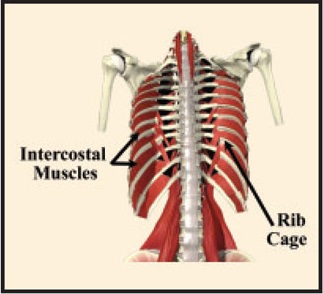
Our two choices for getting air in are rarely explained, but the implications of a tight tummy are that the diaphragm muscle can’t flatten down. This means a chest heave is required, to expand the lung cavity by lifting the ribs outwards. These muscles work against the cartilage joining the ribs to your sternum, flexing that which has become harder with aging. Voice teacher and opera singer Dominique Oyston suggests that women generally conform to societal expectations of first, a flat tummy, and second, having a petite voice that’s raised in pitch. This means pinching off your breath, instead of letting your voice boom out from deeper down (which scares off men who’re insecure about their masculinity!).

The acute pain of early stages of childbirth is countered by conscious, patterned breathing in antenatal classes. A clinical trial for those suffering the archetypal pain caused by fibromyalgia (Zautra and Davis et al) reported in Pain 2010 that slower, deeper breathing reduced pain intensity due to external stimuli, suggesting in explanation an enhanced parasympathetic nervous system tone – overcoming fight/flight of the sympathetic response.

Much like medicating is not just a matter of forcing up hormone or neurotransmitter level, better breathing is not a simple matter of getting more oxygen through to tissues. A trial of 40 sessions in a diver’s hyperbaric chamber to allow normally toxic 100% oxygen delivery as treatment for fibromyalgia used SPECT imaging to determine areas of the brain where activity was changed by the therapy. The magenta section is the Anterior Cingulate cortex (ACC), previously showing less activity than is considered normal, had become enhanced after the 8 week course. This is the area where emotions lead to regulation of heartrate and registering pain (the greatest improvement was in the Brodmann Area 24, for those into neural mapping). The authors concluded the therapy induced neuroplasticity, proposing the effect as due to suppressed glial auto-immune response reducing neuroinflammation. The oxygen overdose’s reasoning can be described as triggering anti-oxidant pathways.

image002 - CopyDelivered by way of a more practical channel, EEGs after an 8 week Breathworks mindfulness course showed changes in the same ACC as pictured in the inset, increasing activity before administration of a painful stimuli. The ability to prepare oneself for suffering isn’t an easy skill to grasp. The course’s first task focuses meditation on a single point, observing one’s breathing.This interoception of bodily sensation is processed by spindle neurons, a type restricted to only two brain regions – the cognitive-emotional area of the insular cortex and the ACC. Lessons progress onto body scans, creating patterns associating feelings and senses, so as to effect mindful recollection for self-control (as discussed previously).

Handling pain better doesn’t make the pain go, straight away. However these regions interface to the endocrine system, and the hypothalamus-pituitary-adrenal (HPA axis) glands release old friends adrenalin, cortisol, and immune system regulator prolactin. If big changes need to be made, it’s best to start at the top – instead of swallowing chemicals in the hope of a quicker fix.

Soften the belly to receive the breath, to receive sensation, to experience life in the body,

Soften the muscles that have held the fear for so long. (Levine, 1997)


6

The smarter way to a 6-pack

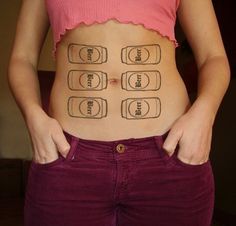
Working the obliquus muscles by crunching won’t help back strength anyway. For more, read http://www.yogajournal.com/article/practice-section/forget-six-pack-abs/

Thoughtlessness

After a lecture by Tibetan Khenpo, Tsultrim Lodro, a question was asked by an upset Buddhist about the appropriation of mindfulness teachings by the military – specifically the use of breathing techniques by snipers. His answer was that soldiers in battle are suffering as much as anyone who’s in need of compassionate skills. The intro to Clint Eastwood’s American Sniper delves into taking of a life as an impossible decision for another mortal to make. Iraq veteran Garett Reppenhagen is a fine example of those who squeeze the trigger and the burden they carry as a result.  His Holiness the Dalai Lama is concerned that mindfulness used for a performance advantage has failed to adopt the fundamental truth of ‘drenpa’, or literally – memory. In ‘Beyond Religion’, it’s “the ability to gather oneself mentally and thereby recall one’s core values and motivation”.
The Western cherry-pick of this single-pointed focused practice but neglect of greater understanding requires a deeper examination of mindfulness, presented here as a reflection on July anniversaries of civilian aircraft downed by the military. MH-17 over the Ukraine being a repeat of an event lost from our memories. On July 3rd in 1988 a Ticonderoga class cruiser, still today the most advanced warship in the US fleet, fired missiles at Iranian airbus flight 655 killing all 290 onboard. Identify Friend or Foe civilan aircraft radar squawks were ignored by combat system operators who tracked the takeoff (on a commercial schedule), acquired the target, and the Commanding Officer approved the warfare officer’s request to engage.

Crew members monitor radar screens in the combat information center aboard the guided missile cruiser USS VINCENNES (CG-49).

Crew members monitor radar screens in the combat information center aboard the guided missile cruiser USS VINCENNES (CG-49).

Mindful techniques require introspection, using the stillness of a calm mind to examine within. CAPT Rogers, with his degree in Psychology should have been able to reflect upon his feelings of anticipating being celebrated as war heroes on the morrow, American Independence Day. This delusion of being under threat could hardly receive adequate attention in that heated moment (imagine “stand down from Action Stations, Skip’s gone to meditate”!), but rather needs longterm cultivation of self-awareness as a practice. Recognition of unhelpful emotional states whilst observing bodily senses assists in overcoming instinct or temptation. The fight & flight response which results from amygdala hijack of the rational higher brain is an evolutionary necessity which becomes catastrophic when in command of a warship. An agitated sympathetic nervous system is clearly manifest in vital signs of accelerated breathing and pounding heart, however monitoring of self by looking within is an acquired skill. Vidyamala Burch’s coursebook ”Mindfulness for Health’ describes misattribution of arousal as “because thoughts, physical sensations, and emotions are all intimately connected.” Freud  misled psychologists by proposing that id and super-ego are discrete entities balancing instinctive and moral behavior, and physicians take the disconnect even further. Responsibilities end with referral for psych treatment. Mind-body interventions are considered to be a type of approach that falls under the umbrella of complimentary and alternative medicine (CAM), which also includes manipulative therapies and herbal products. Repeat, CAM supporters theorise that mind, body and behaviour are all interconnected, and incorporate strategies that are thought to improve psychological and physical well-being, and aims to allow patients to take an active role in etheir treatment. This is considered ‘alternative’?

William James 1884 article in ‘Mind’ laid the groundwork for what’s now groundbreaking discoveries in interoception, or reciprocal bodily & emotive interplay. It’s still early days, while psychiatrists grapple with implications of anxious rats having had irritable bowels. A reprint of med student textbooks will have to wait awhile yet, but Eastern philosophies are ahead of the science here. Mindfulness as defined today relies upon non-judgemental attention to the present moment, which is good. Further teachings * from His Holiness the Dalai Lama introduce an emphasis on remembering, holding in mind an awareness of oneself: “Mindfulness is the ability to gather oneself mentally and thereby recall one’s core values and motivation…. With such recollection we are less likely to indulge our bad habits and more likely to refrain from harmful deeds” .  Recalling insights obtained from meditation is the only way to form new memories, otherwise the same old patterns of behavior will result in a life of Groundhog Day replays. The pragmatic psychologist remains value-free but to do so is an ‘ethical dementia’, to quote Buddhist monk Alan Wallace. Selectively deciding which of those among our clutter of feelings are wholesome takes judgement, based on a set of values. Accept the whole, simply being what it is. Recognise the good, and nurture it. In this way self-esteem is protected, and being attentive to emotions will notice those leading to dire consequences. The ancient Pali word sati means recollection, holding in mind. Being mindful.

*Beyond Religion pg 109

Previous blog postings on mindful meditation had focused on the science, but the complexities of innate immunity and autonomic response may be so overwhelming that the wise approach would be to simply try for yourself.  On the other hand, eastern spirituality provides explanations of health benefits which are heavily laden with Sanskrit language – probably equally offputting. A key learning is the concept of impermanence, the notion that All Things Must Pass (borrowing from Timothy Leary’s LSD inspired interpretation of Tao philosophy). Change, as an all-encompassing and irresistible force, and often unwelcome predicament creates a sense of loss if it won’t pass. The difficulty is managing the change, in order to avoid a worsening due to remorse or seeking of retribution. The Buddha wrote of the second arrow of anguish compounding the suffering of pain. The business world relies upon change as a path to growth, so has embraced mindfulness as a management of the inevitable. Individuals however, too often associate Buddhist notions such as impermanence with religious dogma rather than a philosophic understanding.

A middle way, between medical science and faithful belief is to be desired. At an International Yoga Day gathering, surgeon Ranjit Rao promoted “the higher echelons of Yoga, culminating into meditation. The ability to bring the sympathetic nervous system under control by reducing adrenal hormones is a great boon…”, and anyone who practices sufficient self-control to write a blog every single day on holistic approaches has my respect immediately*. Professor Jayashri Kulkarni, President-elect of the International Association of Women’s Mental Health said that “Finding individual mental peace through the practices of yoga and mindfulness can restore balance in physical and mental health“. Many other bridges can be found, and I found works from Arogyadhama to be eye-opening.  But there’s one language which crosses all cultures.$worship

Money speaks most persuasively throughout history, dwarfing the thousands of years that Ayurvedic therapies have been evolving. Researchers from the UK’s Bangor University reviewed the health economic justifications and issues in the medical journal of Mindfulness this year. The obvious bonus arising from a group session as compared with personal psychotherapy is a monetary one, due to economies of scale. The quandary arises in testing the benefit of a public health initiative delivered to groups of participants, whereas testing the efficacy of an  intervention has always focused on an individual’s complaint. Cost-effectiveness reports for health funding are typically consequent to successful trials of a therapy conducted under rigorous research protocols such as blinding of assessors. For a medication, this is easy – commitment to take a pill bears no burden. But to undertake 8 weeks of intense  focus requires a degree of commitment from a patient who’d presume the therapy to have merit, and thus reported outcomes may be biased.

Even more complex is compliance with medicine’s gold standard test – the Randomised Control Trial (RCT). The control or comparator group is either standard care or a placebo/sham treatment, but neither conform to our requirements. There is unfortunately no standard in care for fibromites (just as well for courts workload, else judging from social media narratives then 100% of their time would be booked by medical malpractice litigants for whom nothing is being done!), although consensus opinion endorses a multi-disciplinary approach.  And duping the controls with a fake course of unhelpful training is a nonsense too. A Cochrane review in April evaluating RCT attempts for mind and body therapies reports a standardised mean difference in Quality of Life score of 0.43 for psychotherapy, and a corrected figure for Mindfulness Based Stress Reduction (MBSR) of 0.39 (corresponding to an improvement of 9.5  points on a scale of 100). Another previous meta-analysis on MBSR for fibromyalgia by Lauche & Schmidt et al calculated score of 0.35 for QoL is very much in accord.  These results are significant, but insufficient.

One avenue for better results is the means of delivery – an individual therapy session vs group. Jon Kabat-Zinn’s MBSR launch a quarter of a century ago with publication of ‘Full Catastrophe Living’ has been adapted in this manner as Mindfulness Based Cognitive Therapy. Doctors reporting good results such as Craig Hassed, or Unlearn Your Pain’s Howard Schubiner may have benefitted from their clinical credibility when transforming client thinking. The timescale for achieving results also deserves further study – yogis put in years to attain insight, whereas a pharmacy can plaster over problems in a quick transaction. Understanding progress through diaries is to be encouraged, and biofeedback also holds promise. This could be respiratory testing (breathing.com offers some simple tools) or heartrate monitoring in order to understand autonomic nervous system balance between fight&flight and rest&digest. Your opinions and experiences are sought, as this solution continues to evolve.

* Admirable achievement even before considering he also authored ‘Meditation and Martini: the subtle cocktail of balance’