The Oz equivalent to the US FDA is the TGA, and their advisories provide both patient and doctor with assurances of drug safety. Ours can be searched at http://www.ebs.tga.gov.au to find that they consider the evidence for cardiovascular risk in Celebrex/celecoxib as being wholly provided by the report ‘Gastrointestinal toxicity with celecoxib vs nonsteroidal anti-inflammatory drugs for osteoarthritis and rheumatoid arthritis: the CLASS study’. This is a trial conducted by the manufacturer Pharmacia – five doctors were employees and Fred Silverstein MD was a consultant, hence another employee, but a contracted one. CLASS ran for 27 months, but only the first 6 were written up. Any heart attacks or strokes 48 hours after stopping the drug were excluded, so if chestpain led to dropping out of the trial then any subsequent event was deemed to be irrelevant. Even if fatal. Flimsy, verging on dodgy grounds – so some detail is provided here for your discerning evaluation.

Steroids such as Prednisone are awesome, but awful in longterm usage. Celecoxib is a non-steroidal anti-inflammatory drug (NSAID) for pain relief, a second generation inhibitor of COX-2 (_coxib)  inflammatory prostaglandins with less stomach risk than COX-1 inhibitors of prostaglandins (so far, seemingly so good). COX-2 is a driver of the PEG2 level controlling your hypothalamus’ setting of core temp – last flu bout, you noted fever came with pain? And the hypothalamus initiates inflammatory cascades via the HPA axis: churning out cortisol, adrenalin… oh dear. Some prostaglandins encourage herpes virus – to which everyone will have had exposure by the age of three. It’s everywhere. The likeness between fibromyalgia and viral-induced chronic fatigue hasn’t been overlooked by surgeon Skip Pridgen, who’s patented combo of celecoxib and an anti-viral is claimed to have commercial prospects for treating FM. But it’s also associated with a 37% increase in heart attacks and strokes – as Wikipedia would tell you.

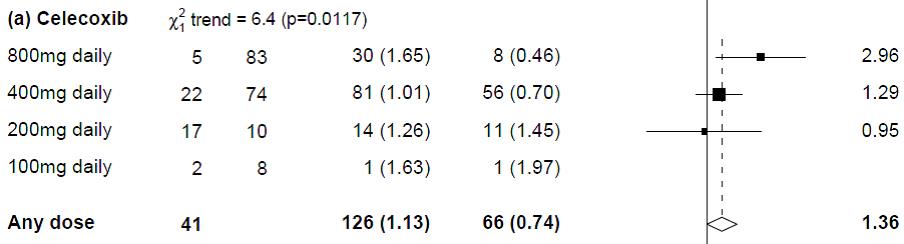
Their citation is the 2013 Lancet article by the CNT collaboration (including Cochrane group’s usual suspects Bombardier * and Tugwell), systematically reviewing trials for adverse events associated with NSAIDs, which are fortunately rare during the monitored period. Especially since the inclusion criteria for arthritic participants precludes existing cardiovascular disease – hardly representative of real patient’s co-morbidities! The breakdown in a supplementary report shows that in fact 200mg has an indeterminate risk, but volunteers testing 400 should be nervous, and those on 800mg must be wondering about misplaced trust and whether insurance is paid up. A similar result during a trial of pain relief for colorectal cancer on 2,000 patients caused the safety committee to terminate, even though the elevated risk for those on only 200mg was non-significant. The Forest plot shown is named for its ability to show with confidence the wood amongst the trees, aggregating many trial results and weighting the risk according to their studies’ reliability.
celebrexOK
Vioxx, or rofecoxib COX-2 inhibitor scandal of FDA corruption and pharma coverup of heart attacks during trials was summarized by the court trial statement of “malicious, oppressive, and outrageous” conduct. Every suspicion of misconduct was confirmed. Complicit medical journals, doctors recruiting patients for ‘seeding’ of the market, and off-label promotion accompanied by false claims resulted in a settlement of $4.85bn. It’s equally easy to be fearful of Celebrex, even though Pfizer’s fight against patent expiry has conviction. Of its merit and benefit, not just the criminal convictions 😉

Along with CNT, the Safety of NSAID group meta-analysis of 25 studies found that higher dosages doubled the lower dose’s slightly increased risk of a heart attack. But declines to define where the dose cutoff lies.  The International NSAID Consensus Group think it’s good for those without elevated cardiovascular risk or with hypotension (likely to be evident in fibromyalgia and CFS). The cheque-red (sic) history of disdain for truth and ethical behavior exposed by court evidence demonstrates the need for systemic overhaul, because the truth is suppressed by industry.

Pfizer bought celecoxib via Monsanto’s drug subsidiary Pharmacia&Upjohn along with patent rights and their falsified trial data – since internal memos described “cherry-picking” of only the favourable results (mentioned in the opening paragraph). The new owner’s marketing efforts have been formidable, but accounts department was tardy in paying bills – the drug’s original discoverer Brigham Young University only recovered royalties from Pfizer through a half $bn court settlement. Anaesthetics Professor Scott Reuben was jailed for fabricating celecoxib trial results, coincidental with his promotion of combo therapy with Lyrica or Neurontin (No! Really?) Pfizer’s sponsorship of the studies doesn’t appear in hospital financial records however, raising the possibility that funding was paid directly to the fraudster. Interestingly, only one man was responsible for complete fabrication of studies. None of his team’s research careers were affected.

A 2002 BMJ article addressed fear of ulcers, independently reviewing studies on 15,000 participants. It was co-authored by Pfizer associate director of R&D. And omitted to collate adverse events of a cardiovascular nature ie those likely to kill you, since ”… While it is important to evaluate this concern, this was not possible here as the celecoxib trials we included did not report outcomes comparable with those assessed in Vioxx Gastrointestinal Outcomes Research.”

Meantime, the jury’s out. If pain relief affords you better Quality of Life, then individual decision making would be far easier if evidence wasn’t provided by dishonest researchers. Longterm study registered as NCT00447759 includes cardiovascular risk in the ‘Standard Care versus Celecoxib Outcome Trial’, without mentioning that Pfizer invested $43m (it’s a note within a press release, but no sponsors logo appears alongside nine of those for collaborating universities) – rather it’s claimed to be “an academic, investigator-initiated study, requested by the European Medicines Agency (EMEA) and sponsored by the University of Dundee.” The website states that “The study commenced in January 2008 and is expected to run until at least 2012”. Also concluding soon is NCT00346216, tracking some 20,000 patients over 7 years by Pfizer sponsored researchers, who’re reticent to declare conflicts of interest in their article on ‘Rationale, design, and governance of Prospective Randomized Evaluation of Celecoxib Integrated Safety versus Ibuprofen Or Naproxen’ (PRECISION) – other than having signed an undertaking to avoid commercial relationships during the conduct of the trial.

Coincidental report: ‘Celecoxib, but not rofecoxib or naproxen, attenuates cardiac hypertrophy and fibrosis‘, co-authored with Pfizer staff and published in 2010  is certainly promising, since this re-modelling is a leading cause of heart failure. These two studies could be win-win for Pfarma’s master puppeteer, and shareholders seem likely to be Celebr-ating. Pfizer’s statin Lipitor, being the highest grossing drug of all time, means that commercial interests are inexorably intertwined with every conference-attending cardiovascular expert’s research funding, but the secrecy is disturbing … (to be continued).

2017 update: PRECISION reported to ACR a couple of months ago, and SCOT trial was published. It’s safe enough.

* Claire Bombardier reported consultancies for Abbott, Amgen, AstraZeneca, Bayer Inc., Biogen Idec, Bristol-MyersSquibb, Hoffmann-La Roche, Merck(Schering Plough Canada), Pfizer and UCB Canada Inc., and is a member of an advisory board for Janssen (Merck & Company Inc.), Combinatorx Incorporated, Schering Plough, Pfizer, and Takeda Canada and holds research grants from Abbott Laboratories, Bristol-Myers Squibb Canada, Janssen, Hoffman La-Roche, Pfizer, Schering Canada and UCB… as listed  at doi:10.1093/rheumatology/kes032. The disclosure of conflicts-of-interest in the Lancet  the year following has only three consultancies listed. Near enough’s, good enough.

New Romantics FB3 actually wrote this about Thatcher-era Britain so the soundtrack doesn’t warrant linking, but the title suffices to illustrate a theme. In the mid-60s Canadian cystic fibrosis patients were entered onto a tracking registry, and other countries followed suit. The US foundation extracted outcome reports and used it to rank treatment centers, and the UK NHS mandates recording of all clinic attendance thus facilitating cross-country reporting. The best practice evidence revealed in this way is certainly less biased than any Cochrane review, since it’s also completely non-selective.
A more commercially oriented registry has been built at the for-profit PLM described here a few months ago. An FAQ encourages sufferers to ‘donate their data’ towards finding a cure, and this raises the intriguing idea of their vested interest overriding concerns about case confidentiality.

It’s not such a new idea. Grand rounds are a tradition in teaching hospitals, and case studies or series present de-identified but intimate details for elucidation of a condition. They’re win-win situations. Research institutions can also bend privacy rules to their own means – such as through ‘opt-off’ implied consent. Registries.org.au shows the benefit of, and reliance upon full capture of clinical care outcomes for quality monitoring.
fb3
On the other hand, requests to the Director of Grants at NHMRC for the identities of reviewers approving research funding applications (in order to scrutinize for conflicts-of-interest) are denied – using as disclaimer “confidentiality of applications and that (sic) all personal information is dealt with in accordance with our obligations under the Privacy Act”. Their oxymoronic Principles of Peer Review of articles 2 “All stages of peer review are transparent” and 6 “Participants respect that confidentiality is important to the fairness and robustness of peer review” contradiction is exposed when a falsified report is challenged, posted in detail here. For anyone wishing to draw on a correlation between mental health and chronic pain, for all eternity, that study can be cited. The artificial construct of epidemic mental illness results in inadequate treatment available to those genuinely suffering, and a pill-popping panacea instead of fruitful therapy.

Similarly secret, we are invariably blinded to identities of the peers for a peer-reviewed journal. The commercial imperatives of publishing have been exposed by luminaries such as the BMJ editor, who, following a quarter of a century as chief executive wrote in open-source PLoS: ‘Medical Journals Are an Extension of the Marketing Arm of Pharmaceutical Companies’. Studies on the peer review process also show this form of governance is a fallacy. It seems to have been lost that the purpose of research is to improve outcomes, and that the data belongs to the patient rather than their drug dealer. Ownership has underpinned the ethical guideline of ‘beneficence’ instituted after Nuremberg, and accountability was promised by the institution when informed consent is granted by study participants.  That consent can’t be withdrawn posthumously if it doesn’t work out as expected.
Militant united voices can redress the present disempowered situation, only tolerated out of the individual patient’s desperation to obtain effective treatment for which they’re handsomely rewarding their service provider. That’s my dream. The reality is that a petition to draw the attention of our Health Minister, raised on the forum representing a (conservatively) estimated 600,000 fibromites managed only a few thousand signatures. As to whether meekness, or ignorance of commercially driven bias is to blame I’d suggest the former. Even if ‘doctor’ no longer translates from the Latin ‘teacher’, their authority is nonetheless unassailable.

Why don’t we do it in the road?

Paul McCartney wrote this song watching monkeys in Rishikesh, wondering what’s holding us back from doing it anywhere & with anyone. Near-same DNA also drives us to procreate or perish, a larger tribe being protective against predators. Compare the Emperor penguin, whose solitary annual egg is so precious that the male nurses it for the Antarctic winter. Now that’s hardcore toughguy! Can you imagine SAS or Special Forces taking on 2 months duty at 20 below, round the clock? Whether our species is better off breeding or brooding is best explained by Butters in the International Women’s Day episode screened in Oz yesterday and linked as a clip. These 8-year old boys are our best hope for future men moving on from our neanderthal roots.procreate

Hunting tigers to the brink of extinction has successfully risk managed our perishing, but we haven’t kept pace by evolving. Jon Kabat-Zinn wrote in ‘Full Catastrophe Living’ “But the flight-or-fight reaction kicks in even when there is no life-threatening situation facing us. It is sufficient for us just to feel threatened.”  The monkey brain reacts by releasing catecholamines such as adrenalin in order to to enhance survival – quickening the heart and vasoconstricting peripheral blood vessels. Hopefully the higher brain cortex can override the chemical flood with some rational control, delivered electrically through the parasympathetic nervous system. The degree of balance in this response is measured by HeartRate Variability studies of the fine-tuning control that can be achieved.

The value to an organisation of equanimity over impulse is promoted by neurologist Alan Watkins with his advice to HR on calm leadership. A subjugated ‘rest & digest’ parasympathetic system is called dysautonomia, and the fibro & CFS patient communities are passionate advocates of A/Prof Chris O’Callaghan with his Tilt Table Testing at the Austin’s Blood Pressure Clinic. Explaining the process when giving a diagnosis doesn’t often lead to resolving the internalisation of stress, which blocks autonomic responses. Carrying the muscular tension inside soon limits depth of breathing, favouring rib expansion over the more relaxed soft-belly diaphragm. Flexing your rib cartilage gets difficult with age, and it hurts. Luckily there’s instructions on how to breathe at the site breathing.com, and it’s never too late to learn. Psychoendoneuroimmunologists understand the impact of carrying around allostatic load, unfortunately noone can understand their bridging of four disciplines. Certainly not the GP, nor the patient with their expectation that there’s gotta be a pill to fix this. I hope South Park will explain this in one of their inimitable parables for me. Meanwhile, here’s a contemporary take:

This post’s theme is more cleverly conveyed by Zvyagintsev in ‘Leviathan’, where the human condition is literally spelt out for you. Putin thinks the film’s about himself, but of course he would.

2014© Medscape staff surveyed physicians on ethical issues, finding less than half confessed to a weakness for a freebie. That’s encouraging to drug reps, since influencing just a few Key Opinion Leaders pays dividends. So long as the flock all think alike, this being exemplified by a disclosure. The practitioner failing to practice what he preaches!drugreps
Dr Justin Coleman boldly challenged pharma thru his official position with Royal Aust College of GPs, fronting a well-publicised ‘no reps’ in the surgery campaign which raised ire among his fellows. Seriously, who’d ever believe wealthy physicians could be bought with a Bic? A humour-laden registrar tutoring session blogged recently under ‘Uncertain Dealings’ raises doubts. “Thus, when a patient complains of a painful lower back, my eventual diagnosis, after a thorough history and examination, is ‘low back pain’…. And, as for assuming my intervention of massage or gabapentin directly causes the pain’s eventual resolution, well…call me Dr Doubt!” Bon mots over a patient suffering pain aside, this is revealing. Gabapentin is an anti-convulsant for epilepsy, which happens to also fix everything – if Pfizer’s offlabel marketing is to be believed. Fines for such of $430m in 2004, $142m in 2010, and $615m (including $325m class settlement) in 2014 were just incidental costs alongside their promotional budget. The best evidence from Cochrane states that less than half of those with postherpetic neuralgia or diabetic neuropathy will obtain pain relief. So uncertainty over cause leads to a stab (glad he didn’t become a surgeon) that the pain originates from damaged nerves, and an indirect consequence of a hundred Pfizer Aust pain presentations to doctors in the previous 6 months just happens to be a prescription for Neurontin. And a little rub down there, in case of a herniated disc perhaps.

There’s been 6 studies into gabapentin for nociceptive pain, ie hurting without malfunctioning nerves, and all the results were suppressed by the company. They weren’t published, because they were negative. This disturbed Kaye Dickerson sufficiently to inspire a 57 page dissertation on the gabapentin, with a few hundred pages of supporting appendices.
The white knight * can offer no other assistance, and how did this come to pass? A letter from Pfizer Aust in 2003 prefaces the corporate strategy – avoid offlabel fines by investing in more approval trials. Dawn Carroll was recruited by Pfizer in ’07 and co-authored an updated Cochrane review in ’10, which was surprisingly favourable to their products gabapentin and pregabalin for chronic pain. All up, she’s published 50 articles with the Pain & Palliative Support group of Cochrane’s Editorial boardmember Prof Andrew Moore. Moore’s 2014 article for Jnl of the American Medical Association, ‘Antiepileptic Drugs for Neuropathic Pain and Fibromyalgia’ confirms that marketing-based medicine penetrates everywhere: “The Neuropathic Pain Special Interest Group of the International Association for the Study of Pain and the National Institute for Health and Care Excellence recommend gabapentin and pregabalin as first-line treatments for neuropathic pain. These results support the recommendations.”

The future holds little promise, since a check of registered ANZ Clinical Trials of gabapentin for bad backs tells us Pfizer is comparing gabapentin against pregabalin for sciatica – which won’t offer us much of a choice (they’re related drugs having identical mechanisms). The obvious difference is that pregabalin is more expensive – the fine for offlabel promotional bribery was double that of its stablemate, at $USD2.3bn

I’d ridiculed medicine’s adoption of the caduceus previously. Perpetually going in circles makes the ouroboros – the snake eating itself, a more appropriate motif.

*Justin claimed in a memo that his example was an ironic motif, because he campaigns against industry influence on prescribers such as for gabapentin.  I value his opinion on popular culture as an illustrative means, and intend to  incorporate same next month. But perhaps the somewhat more socially critical Southpark, than the sagely Gandalf.

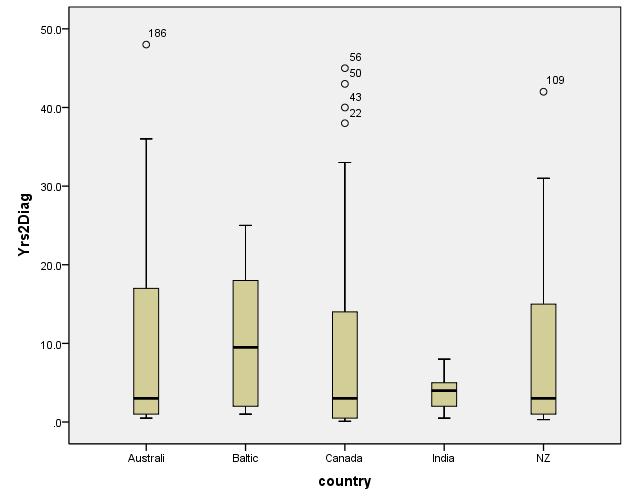
30,000 fibromites subscribe to PatientsLikeMe (PLM), submitting medical history, medications prescribed and a subjective pain & fatigue score. Site FAQ is unashamed in disclosing that information is for sale, the loss of privacy being traded against useful efficacy reports on interventions.  Epidemiological comparisons between climatically alike countries Canada/Baltic states and Australia/NZ wasn’t of as much interest as was extracting timeframe from first symptoms to the patient’s obtaining a diagnosis of FM. Although India’s supremacy isn’t statistically significant (Mann-Whitney non-parametric test is around the median, rather than averages) at reducing doctor-shopping in order to find an enlightened one, this issue is nonetheless worth visiting. Which is where the past few months went!india

First observation was that doctors aren’t quite so other worldly as in the West, and as a service provider they’re relatively cheap. Few bucks for a consultation, which can easily be circumvented since pharmacies don’t require a script. The GP competes with doctors of Ayurvedic medicine using traditional methods, regulated and funded by Govt. The most famous advocate, Deepak Chopra is currently undertaking clinical trials into efficacy across 6 Universities (including Harvard). Practitioners questioned on therapy’s mechanisms seemed well informed. Fabricated pharmaceutical trial reports in Hyderabad is a recent cloud of infamy over the 1000 generic drugs suspended by the European Drug Agency, but scientific research has been less creatively and more rigorously innovative. An excellent appraisal of other’s studies on active therapies for fibromyalgia out of Delhi ‘Autonomic nervous system profile in fibromyalgia patients and its modulation by exercise: a mini review’ was sufficiently impressive to warrant linking of an excerpt under Downloads.

A second observation is that meditation and yogic thought were embraced by a disproportionate number of foreigners. Rishikesh is the usual destination, but an interest in Iyengar yoga led down the coast through Pune (BKS’s hometown) to Goa (more than just a beach!). The Himalayan Iyengar school relocates here for the winter, running Yoga retreats like bootcamps. Although the practice includes props used to support chronic ailment sufferers in position, the 4 hours were intense. Describing their teaching that “… all myalgias can be fixed by hanging upside down” as lacking evidence base is an understatement, but the idea of tackling dysautonomia by increasing pressure upon baroreceptors could indeed have merit. At a nondescript studio in Koregaon Park, Pune the class concluded with assessment of disposition and dietary recommendations. This picked up lifestyle behaviors that preceded contraction of FM, and was quite in accordance with science (© Elsevier). Yoga is described as India’s gift to the world, and local surgeon Dr Ranjit Rao shares his insights “Chronic pain conditions such as …, and fibromyalgia are often better managed with a holistic approach that includes yoga as well as other modalities.” His book ‘Meditation & Martini‘ attempts to bridge the gulf between advocates of pharmacotherapy and self-healing.
Gooders*, but is it effective? A query on PLM which ranks all interventions by patient’s score puts yoga third, behind LowDose Naltrexone and D-Ribose (mitochondrial fuel supply). Surprisingly, theCochraneLibrary.org has very little to contribute. Of 34 conditions treated by yoga reviewed systematically, ranging from epilepsy to dementia there’s no report on benefit in musulo-skeletal conditions (bar Prof Wieland’s in-progress evaluation of the literature for chronic lower-back pain). Rheumatology has focused overmuch upon lifelong dependence on palliative drugs at the expense of multi-disciplinary therapy, but another excerpt scanned this time from ‘Yoga for Arthritis‘ out of Swami Vivekananda Yoga press in Bangalore is rather more inclusively enlightened.

* Naval slang, translated: ‘Good as’ can be expected, in an otherwise hopeless situation. Actually, I’ve always had a healthy respect for India.

Doctoring the evidence

If your doctor is any good, they’re users of theCochraneLibrary.org founded by Sir Iain Chalmers, whose online book I’ve previously linked. Reports of treatments are gathered systematically, to avoid cherry-picking of that evidence which is more favourable to pre-conceived ideas. An assessment of bias follows formal rules, and a statistical meta-analysis (trainsmashing) of outcome results conveys confidence limits in the solution. All reviews are written to the same format and lay folk can benefit from this collective wisdom (if they’ve learnt from reading Testing Treatments), since they’re altruistically distributed in many countries. 1424312_368966716574253_1835599297_n
Authoring is an act of selflessness by prestigious experts in their field, although displeased editors can dismiss any work if it disagrees with their perspective. Fibromyalgia was considered too different an etiology from neuropathy to jointly consider a common treatment, even though the Cochrane group editor published his own ‘Oxycodone for Neuropathic Pain and Fibromyalgia’ a fortnight earlier. The same team included a Pfizer employee when reviewing anti-convulsants for acute and chronic pain, yet more hippocratic hypocrisy.
Co-founder Prof Peter Gøtzsche published in 2013 the exposé: ‘Deadly Medicines and Organised Crime: How Big Pharma has Corrupted Healthcare’, an excerpt from pg84 follows. ”A rare admission that doctors’ opinions are for sale to the highest bidder was provided by Canadian rheumatologist Peter Tugwell, who wrote a letter to several major companies soliciting funds for (Continuing Medical Education) conferences on behalf of an organisation called OMERACT: We think that support for such a meeting would be very profitable for a company with a worldwide interest in drugs targeted in these field. The impact of sponsorship will be high…” This is the very same Cochrane’s Prof P.Tugwell who co-authors with musculoskeletal editor Prof Rachelle Buchbinder on OMERACT progress. After the 12th biennial conference we’re yet to discover how rheumies intend to measure outcome improvement – seemingly a major impediment to actually doing any investigations into treatments. May’s junket to Budapest has yet to be reported (10 months later), but watch for a breakthrough report (once the holiday photos have been put in order) at: http://omeract.org/conference_proceedings.html
The weblinked chapter ‘Pushing children into suicide with happy pills’ is preceded by ‘Psychiatry, the drug industry’s paradise’, opening with a delusional claim that “Psychiatrists are also ‘educated’ with industry’s hospitality more often than any other specialty”. Citation given is Ray Moynihan’s “suspicion”,  in turn citing a report co-written with Lisa Bero and submitted to BMJ but not published. Their précis of Medicines Australia Education Event reports actually found psychiatrists to be 5th placed in per head promotional spending, back in 2008. In the most recent report rheumatology is clearly the most rewarded specialty – sponsored by pharma with $1mil to attend overseas conferences and another $1mil for pain management seminars at home. Sadly, the sanctimonious supply of evidence for your doctor’s decisions is dirty at the source.

It’s not apparent just who the leading pushers of happy pills may be, but the anti-depressant amitriptyline/Endep has two trials on the go – Flavia Cicuttini hopes to fix backpain and Anita Wluka sees opportunity in osteoarthritis. These rheumies from Buchbinder’s department at Monash are hosting the Melbourne leg of Peter’s Mentalaz 2015 tour, and despite NHMRC public funding of their studies the justifying proposals for this 54-year old drug are secret (requesting memo response: “the protocol is not in the public domain”). Easy money – Prof Cicuttini is listed in the Assigner Academy, which determines the members of the Peer Review Panels for grant approvals. Their recent review of the accumulated evidence  ‘Are depression, anxiety and poor mental health risk factors for knee pain?’ states that one high-quality study was found correlating depression with 4.4% of variation in osteo knee pain & disability scores (r=0.21), ie 95.6% of pain perception was attributable to other factors (notably self-efficacy). Their 2014 report ‘Relationship Between Mental Health and Foot Pain’ concludes that “Mental health is associated with changes in foot pain”. Which omits the keyword ‘not’, since the Mental Health domain of the Mental Component Summary was nonsignificant – however the Vitality domain (survey items Pep & life, Energy, Worn out, Tired) was the determinant of deterioration. The implication that ongoing pain is associated with mental illness (survey items Nervousness, Down in dumps, Peacefulness, Blues & sadness, Happiness) is plain, dumb wrong.

Hardly good reasons to step out of specialty and into psych, so what are the risks? Tolerable, but after dry mouth weight gain is 2nd worst  – tho’ a mobility scooter will fix that.  They also cited three “high-quality” * trials of Cymbalta/duloxetine for knee osteo, but two of these were conducted by the manufacturer. Mmm, you can just smell that quality. It’s also a riskier drug than Endep due to addiction – the US FDA has classified Cymbalta Withdrawal Syndrome, and (shhh, don’t tell anyone) suicide risk (the FDA concealed deaths during trials behind “Some clinical trial data are considered trade secrets, or commercially protected information“). Is amitriptyline any good for pain? A Cochrane review of trial results for neuralgia states “The fact that there is no supportive unbiased evidence for a beneficial effect is disappointing, but has to be balanced against decades of successful treatment in many patients“. Will it work for you? Until pharmacogenomics comes into maturity, read the tealeaves …. or ask for a quick serotonin bloodtest to judge for yourself whether you’re deficient.

Conflict of interest declaration: I’m distrustful of physicians due to a conviction that secretive money flags corruption, and alternative therapies hold greater promise for this reason alone.

* Rather than rely upon CONSORT or GRADE standard checklists, PEDro assessed ‘quality’. Sí, this is true. Not even the late, great Dave Sackett could fictionalise better material.
PS Questions as to who’s watching the watchers overflows onto an earlier post. And did I mention that NHMRC Director of Grants is Monash alumnus?

Framework or Façade?

Introduction. A decade ago the outlook for a diagnosis of HIV positive had turned, due to anti-retro viral drugs. Well-meaning folk were concerned that the therapy elevated cardiovascular risk, so a large multi-centre trial was initiated to record death rates if the drug were titrated to a minimal dosage.  The endpoint of interest was rarely achieved, since backing off therapy let the AIDS virus go viral. The job of burying the bodies was given to the biostatisticians.

Studies have found that 37% of statistics are made up on the spot….[Reliable source]
To explore manipulation of medical research, here’s a hypothetical. Investigators studying obesity and fitness in schoolchildren ensure that prior to athletic tests, carbohydrate loading is provided per specifications from endurance sports nutritionists. The broadly aged kids are given portions appropriate to their size, and field times adjusted for calorific energy levels. Remarkably, BMI had very little effect on athletic results. Heartened by this interventional study, the makers of V-Bomb (corn syrup based energy drinks) sponsor an observational report: Making An Impact – Zoom & Effort (or MAIZE) study. Parents supervised the event, where prior to the test V-Bomb was dropped off with family groups for optional consumption. This was a short run and block of a padded bag, measuring the force of collision. The greatest impacts were delivered by the largest consumers of the energy drink, and an outstanding effort by Georgie ‘Porgie’ P&P (participant privacy protected) saw him approached by the football coach for a fullbacker position.
ppt
I hope a laugh was scored at overriding commercial interest in a fictional scenario, but seriously wonder at the trust placed in our medications. We don’t believe that influence is applied to drug trials, since we haven’t been fully informed of the extent of sponsorship. Past editor of the British Medical Journal Richard Smith’s article ‘Is the pharmaceutical industry like the mafia?’ argues “… that drug companies are doing what is expected of them in maximising financial returns for shareholders, but doctors and academics are supposed to have a higher calling.”

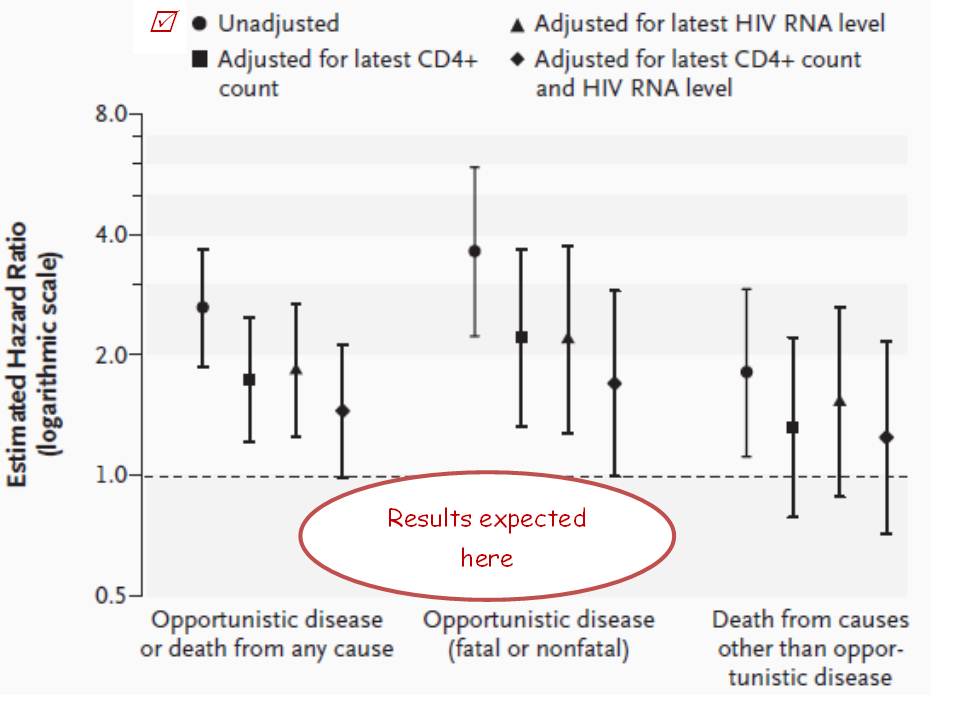
Inspecting the integrity issues arising from ‘CD4+ Count–Guided Interruption of Antiretroviral Treatment’ in the New England Jnl of Med, Nov 2006 raises questions about ‘supposed to’. This example of misconduct is unclouded by any allegations of pharma interference – the medicos created a smokescreen all by themselves. Testing whether episodic use of antiretroviral drugs (ART) against HIV was safer in long term than continuous usage, the strategy’s disastrous results showed the opposite to a benefit  and the trial was stopped. But not because participants in Strategic Management of ART (SmART) were dying. It was stopped only once the hypothesis was proven false – the hazard ratio fell on the ‘bad luck old chap’ side of the line pictured here. The doctors kept waiting for cardiovascular results, but uncooperative participants kept snuffing it for another reason – AIDS. The end of the abstract’s results paragraph plays down the magnitude of the 2.6-fold worse risk, in that after adjusting for CD4+ and HIV counts the hazard confidence interval now nudged the 1.0 (no statistically significant risk) level. Sorry? The effect of the treatment strategy, after adjusting for the effects of the treatment (ART maintains CD4+ counts and inhibits virus growth) is supportive of the null hypothesis … this introduces another acronym, WTF!!! The second to fourth confidence range pictured in each of the three outcomes are these ‘fixed’ figures, shown alongside the true unadjusted (conveniently using a log scale, where the fourfold risk of “fatal or nonfatal opportunistic disease” just appears as a doubling). Another study finding: the more spin applied to the figures, the better they look. Thousands of lives were shortened, but after adjusting for the fact that everybody dies anyway no harm was done.

23 co-authors signed off on this article and NEJM editors have also been remiss, but worse is to come. The planned six-year trial was abandoned after four years due to the sixth meeting of the data safety monitoring board (DSMB) finally deciding that the strategy worsened, rather than improved outcomes. Look up Chart A of Figure 2 in the report to see that this was apparent after just a few months. A statistical power prediction of a result this bad gives the answer that only 35 unfortunate events would suffice to call it quits. A total of 2720 HIV-positive men and women were allocated to the risky treatment group, and left underdosed whilst the disease progressed. Furthermore there’s a page listing 712  SmART medicos who agreed to the study protocol, which minimizes the number of looks the independent DSMB takes at progress results (according to an O’Brien Fleming spend function*). But if a DSMB adheres to International Conference on Harmonisation guideline E9 by not discussing the interim analyses with SmART then those spend rules become void. The DSMB can investigate every event, confidentially. And when death is a primary outcome, why did it take four years instead of four months to call ‘whoops’? 2720-35/712= an average of 3.8 lives harmed per doctor. Hippocratic oath, WTF!

My next posts will move onto the half-hearted disclosure of conflict-of-interest problems, then will explore fabricated conclusions thereafter … standby.

* A biostatistical way of saying that it spoils the surprise for the researchers upon study conclusion.

Prestigious journal The Lancet Vol 359 Issue 9315 page 1442 uses a historical example to remind us to critically judge the Doctor’s ℞. In 1745 the Royal Physician recommended tobacco smoke enemas for victims of drowning during immersion therapy sessions – their being conducted as a treatment for mania. The modified bellows were subsequently provided at stations alongside the Thames river by The Institution for Affording Immediate Relief to Persons Apparently Dead. In an 1840 Kennisgeving (Notice) the Mayor of Rotterdam exalts those responsible for a successful resuscitation by rectal fumigation with a tabaksrookklisteer, after which the practice declined – since it was determined that nicotine was toxic.
I’m not sure that I can do this comedic material justice. If your health practitioner holds you underwater too long, they’re equipped to blow poison up your anus and that’ll restore life? klisteertabak There’s no reports of rectal tobacco usage on Antipodean shores for the countless victims of drowning during the settling of the colony. And it’s not known whether British Tobacco influenced medical adoption of the toxic weed as a cure-all. Nor do we descendants of convicts know whether inappropriate inducements are behind current prescriber’s choices. Lacking an equivalent of the US Sunshine Act for open payment disclosure between pharma and researchers, sponsorship remains cloaked in secrecy. Likewise it hasn’t been deemed necessary to copy America’s Office of Research Integrity, seemingly more prudent to deal with misconduct offline.

Medicine Australia’s Transparency Working Group was unable to reach consensus on a roadmap to setting something up in around abouts a coupla years. Health Ministerial policy is strictly hands-off, shown in a Feb 2014 reply to concerns of specific misconduct “[ahem]…. The Department is supporting an industry-led implementation advisory group that is guiding work to strengthen self-regulation including through the design and development of shared communication systems and a common complaints mechanism“. That’s a relief! I was worried that this matter was being managed by the cleaners because none of the TWG members endorsed the Transparency Model, and the Discussion Paper hasn’t been heard of since the month previous when the TWG was disbanded. And while reform languishes under whichever carpet it was swept, we must trust in our antidepressants as truly beneficial. There’s nothing to prove otherwise – death certificates do not have provision for medication regimes. Similarly so long as any medical procedure wasn’t in the previous 24 hours, the Coroner needn’t be told about that either. The offer proposed (and subsequently accepted) in Edition 18 of Medicine Australia’s (MA) voluntary Code of Conduct submission to the ACCC, being for reports disclosing consultancy payments from Aug 2016 means the clock for direct kickbacks has only two years left to run. That’s real self-regulated progress. Although the loophole exempting payments to researchers via an institution requires that we add to our lexicon “Trust me, I’m a Vice-Chancellor”.
MA Education Event reports disclose that healthy funding is indeed available, to specialists. Amongst Pfizer’s 1490 payments in the last reporting year was over a million dollars spend in sending 34 rheumatologists to conferences in the US and Europe, and 1-day pain management seminars locally. How apt that their Immunology Business Manager’s qualification is commercial pilot with a marketing degree! I’m unaware as to whether pregabalin was promoted, but can’t imagine any material presented had been sourced locally (there being almost* no fibromyalgia research conducted in Australia). ProPublica ‘Dollars for Docs’ 2012 scrutiny of Pfizer’s global corporate citizenship showed just $USD2.8m for travel alongside $USD144.2m for research. These ex gratia payments recognise that our Aussie rheumies are more world weary than world class. I nonetheless trust that that one day we’ll convulse with laughter at the arcane and archaic ℞ of anti-convulsants Lyrica and Neurontin for an autoimmune disorder.
* A survey in 2012 of seven Monash outpatients using pregabalin found diminished anxiety. Higher levels of trust also, no doubt.

Regulation of research results in painfully slow progress, as each proposed intervention is tried singly against a control group. Those participants being duped by allocation to the placebo arm may well wonder if the feel-good/self-resolving* factor hasn’t already been examined sufficiently to be quantified. However conformity within academic rules is the only safe option for the investigator, rather than gamble a decade’s investment in higher education by following any heretical notions. It’s been suggested in ‘Bad Pharma’ by Dr Ben Goldacre that drugs should be compared against each other, in trials conducted  by GPs within the real-world of practitioner ℞ (pending removal of the roadblock placed by Ethics Committee approvals etc, that all research be conducted by institutions).

Where the disorder is conveniently profiled to the satisfaction of the institutions, patient registries give an advantageous shortcut of study recruitment effort. Fibro is inconveniently enigmatic in this regard, and a disenfranchised community lacks trust in the specialists who’ve pushed antidepressants in lieu of solutions. Enlightened mavericks have extended the notion of online support forums into Patient Reported Outcomes for inductive study. Unashamedly intrusive gathering of data is openly shared – meds, QoL ratings, pathology results etc, in the hope of expedited understanding (of both the syndrome itself, and the qualitative, subjective experience of the person’s suffering). 20,000 diagnosed fibromites report their medications and psychometric Pain & Fatigue Rating Score (PFRS) at PatientsLikeMe. Without adjustment for any factors such as an individuals’s symptom duration or other confounders, anti-convulsants Lyrica and Neurontin (discussed previously under ‘Bad Medicine’) showed imperceptible nett improvement, although cold comfort can be drawn from opioids being associated with even worse scores. Endep and Cymbalta are reported more favourably, and surpassed again by anti-inflammatory interventions such as NSAIDs or corticoids. Far better were supplements D-Ribose, Omega-3 and CoQ10, along with massage therapy, exercise and yoga. Raw rankings have no better merit than a wet finger in the air as a meteorological report, but is a pointer to investigations conducted in an approved manner. Psychiatrists Carta & Cacace et al extended the drug trial’s usual brief therapy monitoring of wellbeing on takers of antidepressants out to a year, observing psychometric Fibromyalgia Impact Questionnaire FIQ worsened by 26% compared to unmedicated fibromites.relax Not so good.

Prof Rob  Bennett set aside his Eli-Lilly commitments for a study on the effect of a yoga course of 8 by 2 hour classes. The FIQ-Revised dropped an impressive 27% average, more regular adherents to the program having better results. Strength (rising from chair) also showed significant improvement, compared to controls. But on what basis are claims for yoga’s strengthening of the immune system made, and why have practitioners been given unconventional names, and is fibro an auto-immune disorder anyway?

The wet-finger ranking of therapies, as voted by the patients’ PFRS points to lowdose naltrexone or LDN as winner. At one tenth the approved dosage for withdrawing from alcohol or drug dependence, Adelaide’s Prof Hutchinson achieved inhibition of Toll-Like Receptors (TLR) response to antigens. Antibody mediated immunity is actually a little over-the-top within the central nervous system and brain, where overmuch is at stake. The alarm is sounded by a cytokine (inter-cell signaling) InterLeukin-8 (IL-8), mediated by TLRs and the ominously named Tumour Necrosis Factor. The idea of shooting the messenger in this situation gave rise to the concept of specific Monoclonal AntiBodies or the _mab biological DMARDs, indeed fibros on these report nearly as good a PFRS as the natural supplements can achieve!

Overall there’s more systems functioning as they should than those which aren’t, even if somewhat dysregulated and anyway anti-inflammatory cytokine  IL-10 being elevated in fibro is an example of the body’s fighting back. Suffice to say, it is how homeostasis is maintained. Pro-inflammatory IL-6 was given the alternative description by Pederson & Febbraio as a muscle function myokine in 2012, since its message is integral to the response to exercise.  IL-8 links to fibro pain and IL-6 links to CFS fatigue. Wang & Schiltenwolf et al multidisciplinary program dropped fibromite IL-8 levels (that were initially double those of healthy controls) by half, in 6 months of self-directed application of techniques from a 15 day physical and psycho therapy course. Bote & Ortega et al took physically inactive fibromites and healthy controls for a 45minute moderate intensity cycle ride. Baseline IL-8 levels were fourfold in patients, but one day later the tables had turned. Controls were elevated, and FM levels were now healthy. At the beginning of their extended 8-month water aerobics regime for non-exercisers, IL-6 levels were one eighth higher in FM patients than controls, and mid-course they’d risen another eighth. But dropped by study’s conclusion, to less than healthy control levels. Kiecolt-Glaser compared yoga experts and novice IL-6 levels, finding them 41% higher in the beginners. Pullen & Khan et al dropped IL-6 levels in heart failure patients by 20% in 8 weeks of 1 hour yoga sessions twice weekly. Randomised trials of yogic breathing techniques found improved cardiac autonomic balance in diabetes, asthma, hypertension, IBS and epilepsy.

Baker Heart and Diabetes institute poached Febbraio’s skeletal muscle team after his discovery that concentric contraction is non-damaging, in that it doesn’t exacerbate IL-6 and IL-8 levels. Fair enough too, there’s no money in fibro research. Anyway, play it safe by cycling, or rowing. A good Spanish Open Source study points to many examples through its references, such as ‘Effects of physical exercise on serum levels of serotonin and its metabolite in fibromyalgia: a randomized pilot study’.

* Voltaire: “The art of medicine consists of amusing the patient while nature cures the disease.” or Ben Franklin: “God heals, and the doctor takes the fee.”

A soundtrack may help to paint this picture – the link opens in another tab. Turn the volume way to the right. Dave Wayman’s songwriting for Shannon Bourne used by permission
What’s a Little Pain? I’m quite unable to describe the impact of suffering from fibromyalgia, but hope that the noise in your head will help whilst trying to educate carers about hypersensitivity.
It isn’t so easy to give rheumatology specialists an insight, due to their being the fount of all knowledge. Prof Fred Wolfe removed the following unabridged text from a posting to his blog on the grounds that “We will not publish insulting or crude comments”. Despite the topic being Empathy!
I’m so mad right now. Steaming, boiling, ranting, raving, wanting to kick, hit or punch something mad and I’m not apologising for it – Don’t read it if you don’t wanna know, I don’t give a damn.
My GP is moving after Christmas, so I guess since he thought it’s probably his last visit with me, why not tell me how he really feels about me.
Apparently in all his wisdom of treating me for one year of my Fibro journey, he felt justified to make the comment that I rely too much on medicine to fix the problems I have. That I don’t try other things, I just reach for medication and see if I can increase the dose to make myself feel better and that’s whats led me to where I am now. That he has done his best to try and get me off the medications and stop me relying on them but its my choice and as such I have to accept the side effects.
Give him one week. One god damned week where he doesn’t understand his body, where he has to try a hundred homeopathic remedies that all fail and leave him worse than before, where he reads so much about his condition he can’t think of anything else. Where his family don’t understand the strange things he does any more and laugh at him because he swears they will work, one day. Where a remedy works on day one, but doesn’t on day two for the very same problem. Where he has to throw thousands of his own money – a gvt pension – on a swing and a prayer because he’s so desperate for something to work. Where he has to turn to his GP to prescribe medication because the GP admittedly knows very little about his condition and can not help any other way. Where the illness makes him feel like a different person and the medication makes him feel worse in 20 other areas but fixes the one big ailment flaring that week. Where he can not socialise with anyone because his friends don’t understand and don’t want to – he can’t drink alcohol any more, he can’t party with them, can’t play sport, can’t join social clubs because of the exposure to noise, lights, sensation of any kind. Where he has to walk naked around the house for 5 days in a row because fabric is too painful to wear, sit on or lay on.
Damn him for thinking he knows anything about my life just because he sees me once a month. I don’t ask my physio for scripts because its not his job!! I don’t ask my GP to Dry Needle me cos it’s not his job!! So many things go wrong and there is so much to fit into an appointment every month, why would I tell him all the things I tried that didn’t work?? I’m there as a last resort, not a drive through takeaway. I’m there asking him for help with medication because that’s what he’s trained in – he has told me he knows little about Fibro, treats his share of patients with it, tries to keep up with the latest info, thats it. If it was 7 years ago and he was my naturopath, I probably wouldn’t ask him about diagnoses criteria for Sjorgens. If it was 5 years ago and he was my acupuncturist, I wouldn’t ask him to adjust my back. It’s now and he is my GP – isn’t it reasonable that I ask him for medication and not exercises for my Vertigo??
To even imply he tried to get me off medication is a joke – he said in my first appointment, as all dr’s do when they freak out at my medications, “oh you can’t have all these, we’ll have to wean you off some of these” and proceeded to put me on a new medication that very appointment!!
The crappy thing is that I ruminate heavily and I know that because of my mental health problems, these comments will stay with me a long time and the anger will turn into much more self destructive emotions.
However, I am very proud that I ignored him in the moment and continued on with the appointment as if he hadn’t just struck a red hot poker into the deep core of my being and planted a deep seed of paranoia and mistrust in me about what Dr’s are really thinking and if I will get the same attitude from everyone on my journey.