The Oz equivalent to the US FDA is the TGA, and their advisories provide both patient and doctor with assurances of drug safety. Ours can be searched at http://www.ebs.tga.gov.au to find that they consider the evidence for cardiovascular risk in Celebrex/celecoxib as being wholly provided by the report ‘Gastrointestinal toxicity with celecoxib vs nonsteroidal anti-inflammatory drugs for osteoarthritis and rheumatoid arthritis: the CLASS study’. This is a trial conducted by the manufacturer Pharmacia – five doctors were employees and Fred Silverstein MD was a consultant, hence another employee, but a contracted one. CLASS ran for 27 months, but only the first 6 were written up. Any heart attacks or strokes 48 hours after stopping the drug were excluded, so if chestpain led to dropping out of the trial then any subsequent event was deemed to be irrelevant. Even if fatal. Flimsy, verging on dodgy grounds – so some detail is provided here for your discerning evaluation.

Steroids such as Prednisone are awesome, but awful in longterm usage. Celecoxib is a non-steroidal anti-inflammatory drug (NSAID) for pain relief, a second generation inhibitor of COX-2 (_coxib)  inflammatory prostaglandins with less stomach risk than COX-1 inhibitors of prostaglandins (so far, seemingly so good). COX-2 is a driver of the PEG2 level controlling your hypothalamus’ setting of core temp – last flu bout, you noted fever came with pain? And the hypothalamus initiates inflammatory cascades via the HPA axis: churning out cortisol, adrenalin… oh dear. Some prostaglandins encourage herpes virus – to which everyone will have had exposure by the age of three. It’s everywhere. The likeness between fibromyalgia and viral-induced chronic fatigue hasn’t been overlooked by surgeon Skip Pridgen, who’s patented combo of celecoxib and an anti-viral is claimed to have commercial prospects for treating FM. But it’s also associated with a 37% increase in heart attacks and strokes – as Wikipedia would tell you.

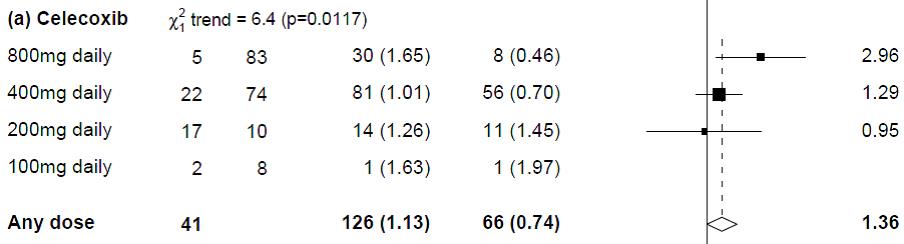
Their citation is the 2013 Lancet article by the CNT collaboration (including Cochrane group’s usual suspects Bombardier * and Tugwell), systematically reviewing trials for adverse events associated with NSAIDs, which are fortunately rare during the monitored period. Especially since the inclusion criteria for arthritic participants precludes existing cardiovascular disease – hardly representative of real patient’s co-morbidities! The breakdown in a supplementary report shows that in fact 200mg has an indeterminate risk, but volunteers testing 400 should be nervous, and those on 800mg must be wondering about misplaced trust and whether insurance is paid up. A similar result during a trial of pain relief for colorectal cancer on 2,000 patients caused the safety committee to terminate, even though the elevated risk for those on only 200mg was non-significant. The Forest plot shown is named for its ability to show with confidence the wood amongst the trees, aggregating many trial results and weighting the risk according to their studies’ reliability.
celebrexOK
Vioxx, or rofecoxib COX-2 inhibitor scandal of FDA corruption and pharma coverup of heart attacks during trials was summarized by the court trial statement of “malicious, oppressive, and outrageous” conduct. Every suspicion of misconduct was confirmed. Complicit medical journals, doctors recruiting patients for ‘seeding’ of the market, and off-label promotion accompanied by false claims resulted in a settlement of $4.85bn. It’s equally easy to be fearful of Celebrex, even though Pfizer’s fight against patent expiry has conviction. Of its merit and benefit, not just the criminal convictions 😉

Along with CNT, the Safety of NSAID group meta-analysis of 25 studies found that higher dosages doubled the lower dose’s slightly increased risk of a heart attack. But declines to define where the dose cutoff lies.  The International NSAID Consensus Group think it’s good for those without elevated cardiovascular risk or with hypotension (likely to be evident in fibromyalgia and CFS). The cheque-red (sic) history of disdain for truth and ethical behavior exposed by court evidence demonstrates the need for systemic overhaul, because the truth is suppressed by industry.

Pfizer bought celecoxib via Monsanto’s drug subsidiary Pharmacia&Upjohn along with patent rights and their falsified trial data – since internal memos described “cherry-picking” of only the favourable results (mentioned in the opening paragraph). The new owner’s marketing efforts have been formidable, but accounts department was tardy in paying bills – the drug’s original discoverer Brigham Young University only recovered royalties from Pfizer through a half $bn court settlement. Anaesthetics Professor Scott Reuben was jailed for fabricating celecoxib trial results, coincidental with his promotion of combo therapy with Lyrica or Neurontin (No! Really?) Pfizer’s sponsorship of the studies doesn’t appear in hospital financial records however, raising the possibility that funding was paid directly to the fraudster. Interestingly, only one man was responsible for complete fabrication of studies. None of his team’s research careers were affected.

A 2002 BMJ article addressed fear of ulcers, independently reviewing studies on 15,000 participants. It was co-authored by Pfizer associate director of R&D. And omitted to collate adverse events of a cardiovascular nature ie those likely to kill you, since ”… While it is important to evaluate this concern, this was not possible here as the celecoxib trials we included did not report outcomes comparable with those assessed in Vioxx Gastrointestinal Outcomes Research.”

Meantime, the jury’s out. If pain relief affords you better Quality of Life, then individual decision making would be far easier if evidence wasn’t provided by dishonest researchers. Longterm study registered as NCT00447759 includes cardiovascular risk in the ‘Standard Care versus Celecoxib Outcome Trial’, without mentioning that Pfizer invested $43m (it’s a note within a press release, but no sponsors logo appears alongside nine of those for collaborating universities) – rather it’s claimed to be “an academic, investigator-initiated study, requested by the European Medicines Agency (EMEA) and sponsored by the University of Dundee.” The website states that “The study commenced in January 2008 and is expected to run until at least 2012”. Also concluding soon is NCT00346216, tracking some 20,000 patients over 7 years by Pfizer sponsored researchers, who’re reticent to declare conflicts of interest in their article on ‘Rationale, design, and governance of Prospective Randomized Evaluation of Celecoxib Integrated Safety versus Ibuprofen Or Naproxen’ (PRECISION) – other than having signed an undertaking to avoid commercial relationships during the conduct of the trial.

Coincidental report: ‘Celecoxib, but not rofecoxib or naproxen, attenuates cardiac hypertrophy and fibrosis‘, co-authored with Pfizer staff and published in 2010  is certainly promising, since this re-modelling is a leading cause of heart failure. These two studies could be win-win for Pfarma’s master puppeteer, and shareholders seem likely to be Celebr-ating. Pfizer’s statin Lipitor, being the highest grossing drug of all time, means that commercial interests are inexorably intertwined with every conference-attending cardiovascular expert’s research funding, but the secrecy is disturbing … (to be continued).

2017 update: PRECISION reported to ACR a couple of months ago, and SCOT trial was published. It’s safe enough.

* Claire Bombardier reported consultancies for Abbott, Amgen, AstraZeneca, Bayer Inc., Biogen Idec, Bristol-MyersSquibb, Hoffmann-La Roche, Merck(Schering Plough Canada), Pfizer and UCB Canada Inc., and is a member of an advisory board for Janssen (Merck & Company Inc.), Combinatorx Incorporated, Schering Plough, Pfizer, and Takeda Canada and holds research grants from Abbott Laboratories, Bristol-Myers Squibb Canada, Janssen, Hoffman La-Roche, Pfizer, Schering Canada and UCB… as listed  at doi:10.1093/rheumatology/kes032. The disclosure of conflicts-of-interest in the Lancet  the year following has only three consultancies listed. Near enough’s, good enough.

Why don’t we do it in the road?

Paul McCartney wrote this song watching monkeys in Rishikesh, wondering what’s holding us back from doing it anywhere & with anyone. Near-same DNA also drives us to procreate or perish, a larger tribe being protective against predators. Compare the Emperor penguin, whose solitary annual egg is so precious that the male nurses it for the Antarctic winter. Now that’s hardcore toughguy! Can you imagine SAS or Special Forces taking on 2 months duty at 20 below, round the clock? Whether our species is better off breeding or brooding is best explained by Butters in the International Women’s Day episode screened in Oz yesterday and linked as a clip. These 8-year old boys are our best hope for future men moving on from our neanderthal roots.procreate

Hunting tigers to the brink of extinction has successfully risk managed our perishing, but we haven’t kept pace by evolving. Jon Kabat-Zinn wrote in ‘Full Catastrophe Living’ “But the flight-or-fight reaction kicks in even when there is no life-threatening situation facing us. It is sufficient for us just to feel threatened.”  The monkey brain reacts by releasing catecholamines such as adrenalin in order to to enhance survival – quickening the heart and vasoconstricting peripheral blood vessels. Hopefully the higher brain cortex can override the chemical flood with some rational control, delivered electrically through the parasympathetic nervous system. The degree of balance in this response is measured by HeartRate Variability studies of the fine-tuning control that can be achieved.

The value to an organisation of equanimity over impulse is promoted by neurologist Alan Watkins with his advice to HR on calm leadership. A subjugated ‘rest & digest’ parasympathetic system is called dysautonomia, and the fibro & CFS patient communities are passionate advocates of A/Prof Chris O’Callaghan with his Tilt Table Testing at the Austin’s Blood Pressure Clinic. Explaining the process when giving a diagnosis doesn’t often lead to resolving the internalisation of stress, which blocks autonomic responses. Carrying the muscular tension inside soon limits depth of breathing, favouring rib expansion over the more relaxed soft-belly diaphragm. Flexing your rib cartilage gets difficult with age, and it hurts. Luckily there’s instructions on how to breathe at the site breathing.com, and it’s never too late to learn. Psychoendoneuroimmunologists understand the impact of carrying around allostatic load, unfortunately noone can understand their bridging of four disciplines. Certainly not the GP, nor the patient with their expectation that there’s gotta be a pill to fix this. I hope South Park will explain this in one of their inimitable parables for me. Meanwhile, here’s a contemporary take:

This post’s theme is more cleverly conveyed by Zvyagintsev in ‘Leviathan’, where the human condition is literally spelt out for you. Putin thinks the film’s about himself, but of course he would.

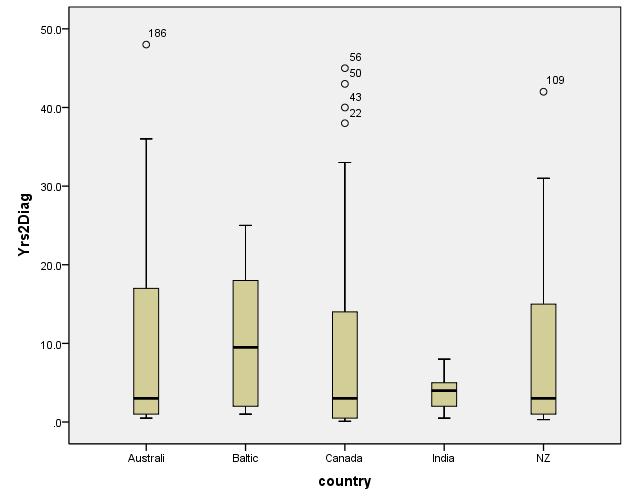
30,000 fibromites subscribe to PatientsLikeMe (PLM), submitting medical history, medications prescribed and a subjective pain & fatigue score. Site FAQ is unashamed in disclosing that information is for sale, the loss of privacy being traded against useful efficacy reports on interventions.  Epidemiological comparisons between climatically alike countries Canada/Baltic states and Australia/NZ wasn’t of as much interest as was extracting timeframe from first symptoms to the patient’s obtaining a diagnosis of FM. Although India’s supremacy isn’t statistically significant (Mann-Whitney non-parametric test is around the median, rather than averages) at reducing doctor-shopping in order to find an enlightened one, this issue is nonetheless worth visiting. Which is where the past few months went!india

First observation was that doctors aren’t quite so other worldly as in the West, and as a service provider they’re relatively cheap. Few bucks for a consultation, which can easily be circumvented since pharmacies don’t require a script. The GP competes with doctors of Ayurvedic medicine using traditional methods, regulated and funded by Govt. The most famous advocate, Deepak Chopra is currently undertaking clinical trials into efficacy across 6 Universities (including Harvard). Practitioners questioned on therapy’s mechanisms seemed well informed. Fabricated pharmaceutical trial reports in Hyderabad is a recent cloud of infamy over the 1000 generic drugs suspended by the European Drug Agency, but scientific research has been less creatively and more rigorously innovative. An excellent appraisal of other’s studies on active therapies for fibromyalgia out of Delhi ‘Autonomic nervous system profile in fibromyalgia patients and its modulation by exercise: a mini review’ was sufficiently impressive to warrant linking of an excerpt under Downloads.

A second observation is that meditation and yogic thought were embraced by a disproportionate number of foreigners. Rishikesh is the usual destination, but an interest in Iyengar yoga led down the coast through Pune (BKS’s hometown) to Goa (more than just a beach!). The Himalayan Iyengar school relocates here for the winter, running Yoga retreats like bootcamps. Although the practice includes props used to support chronic ailment sufferers in position, the 4 hours were intense. Describing their teaching that “… all myalgias can be fixed by hanging upside down” as lacking evidence base is an understatement, but the idea of tackling dysautonomia by increasing pressure upon baroreceptors could indeed have merit. At a nondescript studio in Koregaon Park, Pune the class concluded with assessment of disposition and dietary recommendations. This picked up lifestyle behaviors that preceded contraction of FM, and was quite in accordance with science (© Elsevier). Yoga is described as India’s gift to the world, and local surgeon Dr Ranjit Rao shares his insights “Chronic pain conditions such as …, and fibromyalgia are often better managed with a holistic approach that includes yoga as well as other modalities.” His book ‘Meditation & Martini‘ attempts to bridge the gulf between advocates of pharmacotherapy and self-healing.
Gooders*, but is it effective? A query on PLM which ranks all interventions by patient’s score puts yoga third, behind LowDose Naltrexone and D-Ribose (mitochondrial fuel supply). Surprisingly, theCochraneLibrary.org has very little to contribute. Of 34 conditions treated by yoga reviewed systematically, ranging from epilepsy to dementia there’s no report on benefit in musulo-skeletal conditions (bar Prof Wieland’s in-progress evaluation of the literature for chronic lower-back pain). Rheumatology has focused overmuch upon lifelong dependence on palliative drugs at the expense of multi-disciplinary therapy, but another excerpt scanned this time from ‘Yoga for Arthritis‘ out of Swami Vivekananda Yoga press in Bangalore is rather more inclusively enlightened.

* Naval slang, translated: ‘Good as’ can be expected, in an otherwise hopeless situation. Actually, I’ve always had a healthy respect for India.

Regulation of research results in painfully slow progress, as each proposed intervention is tried singly against a control group. Those participants being duped by allocation to the placebo arm may well wonder if the feel-good/self-resolving* factor hasn’t already been examined sufficiently to be quantified. However conformity within academic rules is the only safe option for the investigator, rather than gamble a decade’s investment in higher education by following any heretical notions. It’s been suggested in ‘Bad Pharma’ by Dr Ben Goldacre that drugs should be compared against each other, in trials conducted  by GPs within the real-world of practitioner ℞ (pending removal of the roadblock placed by Ethics Committee approvals etc, that all research be conducted by institutions).

Where the disorder is conveniently profiled to the satisfaction of the institutions, patient registries give an advantageous shortcut of study recruitment effort. Fibro is inconveniently enigmatic in this regard, and a disenfranchised community lacks trust in the specialists who’ve pushed antidepressants in lieu of solutions. Enlightened mavericks have extended the notion of online support forums into Patient Reported Outcomes for inductive study. Unashamedly intrusive gathering of data is openly shared – meds, QoL ratings, pathology results etc, in the hope of expedited understanding (of both the syndrome itself, and the qualitative, subjective experience of the person’s suffering). 20,000 diagnosed fibromites report their medications and psychometric Pain & Fatigue Rating Score (PFRS) at PatientsLikeMe. Without adjustment for any factors such as an individuals’s symptom duration or other confounders, anti-convulsants Lyrica and Neurontin (discussed previously under ‘Bad Medicine’) showed imperceptible nett improvement, although cold comfort can be drawn from opioids being associated with even worse scores. Endep and Cymbalta are reported more favourably, and surpassed again by anti-inflammatory interventions such as NSAIDs or corticoids. Far better were supplements D-Ribose, Omega-3 and CoQ10, along with massage therapy, exercise and yoga. Raw rankings have no better merit than a wet finger in the air as a meteorological report, but is a pointer to investigations conducted in an approved manner. Psychiatrists Carta & Cacace et al extended the drug trial’s usual brief therapy monitoring of wellbeing on takers of antidepressants out to a year, observing psychometric Fibromyalgia Impact Questionnaire FIQ worsened by 26% compared to unmedicated fibromites.relax Not so good.

Prof Rob  Bennett set aside his Eli-Lilly commitments for a study on the effect of a yoga course of 8 by 2 hour classes. The FIQ-Revised dropped an impressive 27% average, more regular adherents to the program having better results. Strength (rising from chair) also showed significant improvement, compared to controls. But on what basis are claims for yoga’s strengthening of the immune system made, and why have practitioners been given unconventional names, and is fibro an auto-immune disorder anyway?

The wet-finger ranking of therapies, as voted by the patients’ PFRS points to lowdose naltrexone or LDN as winner. At one tenth the approved dosage for withdrawing from alcohol or drug dependence, Adelaide’s Prof Hutchinson achieved inhibition of Toll-Like Receptors (TLR) response to antigens. Antibody mediated immunity is actually a little over-the-top within the central nervous system and brain, where overmuch is at stake. The alarm is sounded by a cytokine (inter-cell signaling) InterLeukin-8 (IL-8), mediated by TLRs and the ominously named Tumour Necrosis Factor. The idea of shooting the messenger in this situation gave rise to the concept of specific Monoclonal AntiBodies or the _mab biological DMARDs, indeed fibros on these report nearly as good a PFRS as the natural supplements can achieve!

Overall there’s more systems functioning as they should than those which aren’t, even if somewhat dysregulated and anyway anti-inflammatory cytokine  IL-10 being elevated in fibro is an example of the body’s fighting back. Suffice to say, it is how homeostasis is maintained. Pro-inflammatory IL-6 was given the alternative description by Pederson & Febbraio as a muscle function myokine in 2012, since its message is integral to the response to exercise.  IL-8 links to fibro pain and IL-6 links to CFS fatigue. Wang & Schiltenwolf et al multidisciplinary program dropped fibromite IL-8 levels (that were initially double those of healthy controls) by half, in 6 months of self-directed application of techniques from a 15 day physical and psycho therapy course. Bote & Ortega et al took physically inactive fibromites and healthy controls for a 45minute moderate intensity cycle ride. Baseline IL-8 levels were fourfold in patients, but one day later the tables had turned. Controls were elevated, and FM levels were now healthy. At the beginning of their extended 8-month water aerobics regime for non-exercisers, IL-6 levels were one eighth higher in FM patients than controls, and mid-course they’d risen another eighth. But dropped by study’s conclusion, to less than healthy control levels. Kiecolt-Glaser compared yoga experts and novice IL-6 levels, finding them 41% higher in the beginners. Pullen & Khan et al dropped IL-6 levels in heart failure patients by 20% in 8 weeks of 1 hour yoga sessions twice weekly. Randomised trials of yogic breathing techniques found improved cardiac autonomic balance in diabetes, asthma, hypertension, IBS and epilepsy.

Baker Heart and Diabetes institute poached Febbraio’s skeletal muscle team after his discovery that concentric contraction is non-damaging, in that it doesn’t exacerbate IL-6 and IL-8 levels. Fair enough too, there’s no money in fibro research. Anyway, play it safe by cycling, or rowing. A good Spanish Open Source study points to many examples through its references, such as ‘Effects of physical exercise on serum levels of serotonin and its metabolite in fibromyalgia: a randomized pilot study’.

* Voltaire: “The art of medicine consists of amusing the patient while nature cures the disease.” or Ben Franklin: “God heals, and the doctor takes the fee.”

An alternative med.

Before OMG there was om. Negativity of previous posts must be redressed by suggesting a couple of ways to take charge over the body’s natural reactions to an often harsh world. Traditional eastern wisdom has recently been embraced by psychologists and business coaches alike. One can follow a mindfulness franchise on the strength of empirical evidence such as that published by Prof Richie Davidson. ‘Alterations in Brain and Immune Function Produced by Mindfulness Meditation’ , 2003 or ‘A comparison of mindfulness-based stress reduction and an active control in modulation of neurogenic inflammation’, 2013. Bill Malarkey published ‘Workplace based mindfulness practice and inflammation: A randomized trial’ in 2013 but his unfortunate name may prevent it’s being taken seriously. Both studies used Kabat-Zinn’s MBSR as an intervention, although following Vidyamala Burch is made easier by the offered product sample at Breathworks.  Ahhh!, the  rheumatologist detractors cry, these investigations are predicated on antibody measures and inflammatory markers such as C-Reactive Protein – which we deny being manifest in fibro!theUniverse
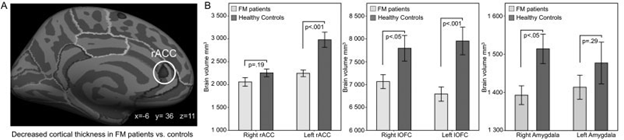
For you skeptics there’s the second, harder path. Let’s start from the premise that FM is a manifestation of a dysregulated cortisol/adrenalin factory – the HPA axis. Deep in our monkey brain is the amygdala which fuels the fight or flight adrenergic pathway, however this is a coarse control since chemical metabolism takes time. Calming electrical override is by the parasympathetic nervous system vagus nerve with help from serotonin-fired neural dopamine fueling a (hopefully) rational prefrontal cortex. Unfortunately, fibro and CFS sufferers lack this moderating instantaneous control as evidenced by reduced heartrate variability. Ashok Gupta’s solution is to re-programme the amygdala. Good luck with that, however evolving tens of thousand years isn’t a promising intervention. <Update Feb 2015: Apologies, Ashok-ji. I’d overlooked December’s report in Arthritis & Rheumatology ‘Overlapping Structural and Functional Brain Changes in Patients With Long-Term Exposure to Fibromyalgia Pain’. The amygdala changes in the right-hand diagram are associated with chronic pain causation…image002

…returning to neuroimmunopharmacology> Parasympathetic neurotransmitter Acetylcholine can inhibit inflammatory InterLeukin-6 (that alone is worth thinking about for its role in TMJD resulting from teeth grinding). Not that you’re going to meditate out of a fever, rather the need is to put the brakes on auto-immune pathways. IL-6 and IL-1 deplete Tryptophan, which we’d all prefer be used in creation of serotonin and ATP for energy but through Tumour Necrosis Factor it’s dumped. It’d be great to block TNF-α upfront through aggressive biological agents such as etanercept or adalimumab, but as rheumatologists deny FM’s suitability this won’t eventuate. Blocking IL cytokines is an even better idea, since Profs Hutchinson and Watkins showed neuropathic pain can be suppressed with naloxone – a shorter acting version of the opioid dependency treatment naltrexone. The diagram in Younger & Stringer et al article: Daily cytokine fluctuations, driven by leptin (tells the hypothalamus to get prolactin out there, but let’s not go there), puts these interactions much more clearly 😉image002
Analysis, paralysis. The neuroimmunologists and endocrinologists weaving logical arguments is messy theory, but the practice is up to your own mind. There’s so little profit to be made that pharma won’t be sponsoring studies into a quickfix pill – waiting for lowdose naltrexone proponents to capitalize on successes by Prof Younger, with approval to market seems most unwise. A mindful approach is more achievable than your cerebral cortex would think!